Wednesday, August 27, 2008

Aromatherapy & Popular Uses


by Dr Vivian Lunny

History

A historical background to aromatherapy may be found in many ancient cultures. Among these we can quote:

In Egyptian civilisation, we find that Immenohthep the famous architect of the Saqqarah Pyramid, Physician of the third Dynasty to Pharaoh Djoser, is said to have formulated his medicines from aromatic plants – among them aniseed and cardamom. Among the Greeks, Hippocrates, considered as the Father of Medicine, recommended the use of aromatics as food and medicine, as well as a fragrant massage everyday for good health. Galen, physician to the Roman Emperors contributed a great deal to the History of Pharmacology. The Galenics method of prescribing pays homage to its originator who 15 centuries ago provided a reference for the practising physician.

Around the year 1000 AD, Avicenna, a Persian poet, scholar, philosopher and physician wrote his Canon of Medicine and re-invented steam distillation.

R.M. Gattefosse, who is believed to have coined the term ‘Aromatherapie’ in 1937, was a chemist. His story is now an Aromatherapeutic legend. It appears that he burnt his hand while conducting an experiment in his laboratory and as a reflex action he plunged his hand into a nearby container with essential oil of lavender. Gattefosse found the pain was lessened and the healing process more pronounced from this application of lavender. A French physician, Dr. Jean Valnet, promoted the use of essential oils of rosemary and thyme as antiseptics and for the treatment of war wounds. After the first world war, he wrote various aromatherapy texts.

The scientific papers and books of Gattefosse, Guenther, Guildemeister & Hofman, Valnet and their disciples, confirmed the therapeutic value of essential oils.

In the early 1960s Marguerite Maury, a French chemist and cosmetologist, who had been exploring the regenerative properties of essential oils and the connection between aromatics and medicinal molecules, pioneered in England, the combined usage of essential oils, massage and other specialised techniques in cosmetology. Her book The Secret of Life and Youth is still one of the most respected aromatherapy books.

What are essential oils?

Essential oils are produced by aromatic plants as part of their photosynthesis. Once produced, they are stored in specialised structures or pockets, distributed according to the botanical species. For example, in the leaves, in the case of mint (Mentha piperita); in the rind in the case of citrus oils such as lemon (Citrus limonum); in the petals as in essential oil of rose (Rosa centifolia); in the rhizomes as in essential oil of ginger (Zingiber officinale); in secretory cells located along the bark which produce a resinous secretion in the case of essential oil of myrrh (Commiphora myrrha); or distributed through more than one of these structures as in the exceptional case of bitter orange (Citrus auranthium), which produces three different types of essential oil: pettigrain from the leaves, orange from the rind, and neroli from the petals.

Essential oils give the plants their fragrance, help it to attract insects for pollination and protect the plant from attack by pathogenic bacteria or parasitic fungi. Essential oils or ethereal oils, are at the heart of the aromatherapeutic treatment. They are the fragrant, highly volatile liquids which are extracted from a single botanical source. Each molecule of essential oil is a unique combination of a large number of natural, organic chemical plant constituents in varying proportions. Among them we have mainly terpenes, alcohols, aldehydes, ketones, esters, and phenol-methyl ethers in varying proportions which give each individual essential oil specific characteristics. The number of these constituents – as seen in a gas chromatography – may be around 200, including trace constituents.

What should one look for in an aromatherapy session?

During the first session the therapist will take a detailed personal history as well as a personal medical history and family history, all of which will allow for the correct formulation and choice of essential oils and methods of treatment.


The main aromatherapy methods of treatment are the following:
a) Steam inhalations utilising the classic old fashioned method, consisting of a bowl of boiling water to which 4 drops of a blend of essential oils are added, while the client is asked to cover his/her head with a towel and inhale the steam. This method of treatment is very beneficial for sinus problems, dermatitis, headaches, and sore throats, among others.
b) Hot or cold compresses where 3 to 5 drops of a blend of essential oils are placed, for example on the site of a spasmodic colicky pain, or on a swollen sprained ankle. (In the latter situation after a physician and X-rays have established that there are no fractures or major injuries present.)
c) Aromatic baths with 2 to 3 drops of the oil blend added to the bath. This will help to reduce stress or benefit specific skin ailments.
d) Specialised aromatherapy massage by qualified aromatherapy practitioners, where the prescribed blend is applied directly to the skin by professional massage techniques.
e) Vaporising a blend of essential oils, where the blend is slowly evaporated in a special burner to create specific moods or to prevent the spread of airborne dis-eases, depending on the formulation of essential oils chosen for this effect.
Professional aromatherapy training

A good aromatherapy training course requires that prior to undertaking the study of aromatherapy, the student either already has relevant certificates confirming their knowledge of anatomy and physiology of all body systems; a knowledge of common ailments and their causes; first aid; counselling skills; and Swedish/ classical body massage, or covers these subjects as a part of the training.

Once the students have accomplished the above, they then move on to the aromatherapy course. These must include an in depth knowledge of base oils or carriers which may be cold pressed vegetable oils or lotions, and their specific beneficial effects on the skin; an in depth study of no less than 50 essential oils; the study of basic organic chemistry to understand the constituents of essential oils; basic botany in order to understand more readily the connection between aromatic plants and their effects; how to take a good case history; make the appropriate assessment; formulate and blend the required essential oils and base oils; provide a good, safe and pleasant treatment and look after their clients to optimum standards. The training should also include information on referrals and liaison with other complementary practitioners and with the Medical Profession.

A qualified aromatherapist in order to be able to practise must be a member of a professional association and be covered by Professional Indemnity and Public Liability insurance. Once qualified, Aromatherapists are able to practise either from Natural Health Centres, Private Aromatherapy Clinics, National Health Hospitals or as part of a General Practice Team.

Popular uses

* Basil is used in perfumery for its clear, sweet and mildly spicy aroma. In aromatherapy, it is used for sharpening concentration, for its uplifting effect on depression, and to relieve headaches and migraines. Basil oil has many chemotypes and some are known to be emmenagogues and should be avoided during pregnancy.

* Bergamot is one of the most popular oils in perfumery. It is an excellent insect repellent and may be helpful for both the urinary tract and for the digestive tract. It is useful for skin conditions linked to stress, such as cold sores and chicken pox, especially when combined with eucalyptus oil. Bergamot is a flavoring agent in Earl Grey tea. But cold-pressed Bergamot oil contains bergaptene, a strong photosensitizer when applied to the skin, so only distilled or 'bergaptene-free' types can be topically used.

* Black pepper has a sharp and spicy aroma. Common uses include stimulating the circulation and for muscular aches and pains. Skin application is useful for bruises, since it stimulates the circulation.

* Citronella oil, obtained from a relative of lemongrass, is used as an insect repellent and in perfumery.

* Clove oil is a topical analgesic, especially useful in dentistry. It is also used an antiseptic, antispasmodic, carminative, and antiemetic.

* Eucalyptus oil is often used in combination with peppermint to provide relief for the airways in case of cold or flu.

* Geranium oil is used as an astringent, antiseptic and diuretic.

* Jasmine is used as an aphrodisiac

* Lavender oil is used as an antiseptic, to soothe minor cuts and burns, to calm and relax, and to soothe headaches and migraines.

* Lemon oil is uplifting and anti-stress/anti-depressant. In a Japanese study, lemon essential oil in vapour form has been found to reduce stress in mice.[30]

* Lemon oil - Researchers at Ohio State University reveals that Lemon oil aroma may enhance one's mood, and help with relaxation.

* Rose is used as an aphrodisiac

* Sandalwood oil is used as an aphrodisiac

* Tea tree oil and many other essential oils have topical (external) antimicrobial (i.e. antibacterial, antifungal, antiviral, or antiparasitic) activity and are used as antiseptics, disinfectants, and in mouthrinses.

* Thyme oil

* Yarrow oil is used to reduce joint inflammation and relieve cold and influenza symptoms.

* Ylang-ylang oil is used as an aphrodisiac

Taken From :http://www.positivehealth.com , http://en.wikipedia.org

About Dr Vivian Lunny

Vivian Nadya Lunny qualified as an MD in 1973. She specialised in Cardiology and Pathology and obtained Postgraduate Diplomas in Holistic and Scientific Aromatherapy Colour Therapy. She was awarded a Doctorate in Alternative Medicine in 1991. She is the proprietor of Real Essences Aromatherapy & Leisure Ltd. and a well known international Aromatherapy and Holistic Medicine Educator and Facilitator.
She can be contacted at: R.E.A.L. Ltd. P.O. Box 58, Stevenage, Herts. SG2 8XR, England, Tel/Fax: 44 (0) 1438 357 357. E mail: 100306.406@compuserve.com or VivianLunny@btinternet.com. You may visit her Internet site at: http://real.simplenet.com


Read more!

Tuesday, August 26, 2008

Jeweled Necklaces


Jeweled Necklaces
Whether you spend a little or a lot, check out fall's key accessory that is as fabulous as it is fake.


Philip Crangi for Vera Wang
Jewelry designer Philip Crangi wired and then wove rhinestones into this big and bold braid for the Vera Wang line. Our tip: Wear hair in a loose updo to avoid any snags!
Crystals, Philip Crangi for Vera Wang, $1,486; at Bergdorf Goodman, call 800-558-1855.


Mawi
At 45 inches, it’s truly long on luxury.
Synthetic pearls, crystals with velvet ribbon, and gold-plated chain, Mawi, $716; at Dernier Cri, call 212-242-6061.


Thea Grant
A thick chain makes the mix day-friendly.
Plated steel, metal, vintage crystals and glass, Thea Grant, $395; buy online now at barneys.com.


Banana Republic
Beads stitched onto fabric make it edgy, and you can tie to your perfect length.
Mother-of-pearl and fabric, Banana Republic, $150; available in November at bananarepublic.com.


Helene Zubeldia
Oversize rhinestones add extra impact to this evening sparkler.
Metal and crystals, Helene Zubeldia, $670; at Curve L.A., call 310-360-8008.


R.J. Graziano
Calling all rocker chicks with day jobs.
Steel and crystals, R.J. Graziano, $275; call 212-685-1248.


Elie Tahari
Pair this with an LBD or a silky top and jeans.
Crystals and satin, Elie Tahari, $398; call 212-334-4441.


Nina Ricci
This baroque beauty sits at the breastbone, a shorter length for fall’s powerhouse pieces.
Semiprecious stones and galvanized metal, Nina Ricci, $1,835; at A’Maree’s, call 949-642-4423.


Alexander McQueen
Inspired by Indian palace jewels, this showstopper’s tiny crystals make it wearable for smaller frames.
Swarovski crystals with freshwater pearls, Alexander McQueen, $4,475; call 212-645-1797.


Balenciaga
At its fashion show, Balenciaga paired ornate collars like this one with two matching cuffs.
Swarovski crystals, Balenciaga, $2,575; visit neimanmarcus.com for stores.


Burberry
Long enough to graze the navel, its vibrant supersize slabs are lighter than they look.
Glass and metal, Burberry, $1,995; visit neimanmarcus.com for stores.

Taken From : http://www.instyle.com


Read more!

Siberian Ginseng , Uses , Benefits , Side Effects & Interactions


Author: Steve Mathew

This article provides description about siberian ginseng , its uses and benefits, some of its main interactions and side effects. This article also deals with the preparations, dosage, clinical trials and phamocology for siberian ginseng .

Siberian Ginseng

Eleutherococcus senticosus (syn. Acanthopanax senticosus) is in the same botanic family as the Panax ginsengs (Araliaceae), but is not a member of the Panax genus and is therefore not considered a true ginseng. E. senticosus, also known as Eleuthero, is commonly referred to as Siberian or Russian ginseng because it is indigenous to Eastern Russia. The root or root bark is used medicinally.

Uses and Benefits:

Siberian ginseng is claimed to have powerful adaptogenic and tonic properties that can modulate stress and improve mental and physical performance under a wide variety of stressful conditions. It was discovered by Soviet researchers who were searching for an alternative to Asian ginseng and other adaptogenic herbs. Officially approved for use in Russia in 1962, Siberian ginseng became a popular commercial drink to help improve endurance. In traditional Chinese medicine, this plant is considered a minor tonic (named ci wu jia). It has been employed for bronchitis, digestion, heart ailments, rheumatism, headaches, and insomnia, and to generally restore vigor and health.

Pharmacology:

The eleutherosides (A-G) are considered the most important constituents in the roots of Siberian ginseng. Unlike the ginsenosides of the Panax genus, however, the eleutherosides are a chemically diverse group of plant chemicals (Iignans, sterols, phenylpropanoids, coumarins, and others), and are not unique to E. senticosus.Soviet researchers conducted numerous animal experiments with Siberian ginseng, and reported enhanced physical en­durance and resistance to infection, radiation, cancer, toxins, and iI variety of environmental extremes. Anabolic, estrogenic, an­liviral, hypotensive, and many other effects have also been demonstrated in animal models. Conflicting reports in which extracts induced both hypoglycemia and hyperglycemia in animals, or enhanced both CNS sedation and stimulation, have been explained by the "adaptogenic" properties of the herb. Alternatively, it may also be explained by different extracts or experimental conditions. Most of the earlier animal endurance studies were unblinded, which also raises the question of investigator bias; a more recent blinded study was negative.

Limited pharmacologic data is available in humans. In a report­edly double-blind, placebo-controlled study, 10 ml t.i.d. of a German product for 4 weeks significantly increased lymphocytes by about 50% in 36 healthy volunteers. In an unblinded, randomized, con­trolled study, 25 drops t.i.d. of an ethanolic root extract decreased glucose and cholesterol (total, LOL, and triglycerides), and increased neutrophil and lymphocyte activity in 50 healthy volunteers.

Clinical Trials:

Most of the original Russian clinical studies have been reviewed and summarized. Initial research reported that athletes performed better; sportsmen had better endurance and concentration; and workers had fewer sick days when taking Siberian ginseng. In multiple studies that included over 2100 healthy subjects, Siberian ginseng was reported to demonstrate adaptogenic effects to help subjects withstand various adverse conditions and stressors (work load, noise, motion, heat, etc.), resulting in enhanced work performance. Studies in over 2200 unhealthy patients reported "benefits" in various diseases such as atherosclerosis and heart disease, acute pyelonephritis, diabetes, chronic bronchitis, hypertension and hypotension, trauma, neuroses, and cancer. However, outcome measures and actual clini­cal benefits are not well defined. Moreover, these studies were uncontrolled or unblinded, and would not meet today's standards for high-quality clinical research.

In more recent controlled trials, benefits for athletic endurance were initially reported in a single-blind, placebo-controlled study, and improvements in muscle strength demonstrated in a placebocontrolled trial with unclear blinding. A Chinese study also reported an increased anaerobic threshold of power load emd decreased respiratory quotient (suggesting enhanced fat metabo" lism during exercise). However, more rigorous double-blind studies have failed to verify these potential beneficial effects. A series of small controlled trials using treadmill or cycle ergometry found no ergonomic benefits for a brand of Siberian ginseng called Endurox. Another well-designed trial of 20 runners found no ergonomic benefits with an ethanolic extract of eleutherosides Band E given daily for 6 weeks compared to placebo. A well-designed, double-blind, crossover study found no measurable ergonomic or metabolic benefits in nine cyclists, randomly given placebo or 1200 mg Siberian ginseng daily for 7 days before two separate endurance cycling trials.

Adverse Effects:

Siberian ginseng is considered safe and nontoxic, although data is limited. No side effects were reported in any of the recent human trials, and there are no well-documented case reports of adverse effects. In the original Russian studies, adverse events were not reported in otherwise healthy subjects, although it was suggested that Siberian ginseng should not be used when blood pressures exceed 180/90. In "unhealthy" patients, insomnia, arrhythmias, hypertension, headaches, irritability, and anxiety reactions were occasionally reported. Caution is thus advised for patients with cardiac disease, hypertension, psychiatric diseases, or when using caffeine or other stimulants, although these potential side effects are not well established.

Side Effects and Interactions:

In two separate case reports, adulterated or mislabeled eleutherococcus preparations (most likely with Periploca sepium,which contains cardioactive glycosides) were associated with androgenization in a newborn and with an increased digoxin level absent toxicity. Safety of Siberian ginseng is unknown in women who are pregnant or breast feeding.

Preparations & Doses:

Multiple products are on the U.S. market, from dried herb preparations to a variety of extracts. In the original Russian studies, doses were usually taken for up to 4-8 weeks at a time, interrupted by 2-to 3-week ginseng-free in­tervals; however, there is no data to support these regimens. Common doses of encapsulated extracts currently on the market include one to three 100-400 mg capsules given 2-3 times daily, roughly equivalent to 1-4 g/day or more of a dried root product.

Summary Evaluation:

Siberian ginseng is commonly used as an adaptogen to help modulate responses to stressors and to enhance mental and physical stamina and endurance. These claims are primarily based on animal studies and early clinical investigations by Soviet researchers. Siberian ginseng does not enhance physical endurance based on more recent, well-designed clinical trials. Limited studies suggest that Siberian ginseng may enhance WBC activity, reduce cholesterol and glucose, enhance memory, and benefit patients with herpes simplex infections, but these studies require confirmation and, in general, the efficacy of Siberian gin­seng is not established beyond a reasonable doubt for any indica­tion. Based on limited data, Siberian ginseng appears safe, with no well-documented adverse effects.

About the Author:
Steve Mathew is a writer, who writes many great articles on herbal medicines for common ailments and diseases. For more information on herbal remedies and home remedies visit our site on health care.

Taken From : http://www.article99.com


Read more!

Monday, August 25, 2008

Monosodium glutamate (MSG): Is it harmful?


Every Chinese restaurant I go to has a sign that says "No MSG." What is MSG? Is it bad for you?

Monosodium glutamate (MSG) is a flavor enhancer commonly added to Chinese food, canned vegetables, soups and processed meats. Although the Food and Drug Administration (FDA) has classified MSG as a food ingredient that is "generally recognized as safe," the use of MSG remains controversial.

MSG has been used as a food additive for decades. Over the years, the FDA has received many anecdotal reports of adverse reactions to foods containing MSG. But subsequent research found no definitive evidence of a link between MSG and the symptoms that some people described after eating food containing MSG. As a result, MSG is still added to some foods.


A comprehensive review of all available scientific data on glutamate safety sponsored by the FDA in 1995 reaffirmed the safety of MSG when consumed at levels typically used in cooking and food manufacturing. The report found no evidence to suggest that MSG contributes to any long-term health problems, such as Alzheimer's disease. But it did acknowledge that some people may have short-term reactions to MSG. These reactions — known as MSG symptom complex — may include:

* Headache, sometimes called MSG headache
* Flushing
* Sweating
* Sense of facial pressure or tightness
* Numbness, tingling or burning in or around the mouth
* Rapid, fluttering heartbeats (heart palpitations)
* Chest pain
* Shortness of breath
* Nausea
* Weakness

Symptoms are usually mild and don't require treatment. However, some people report more severe reactions. The only way to prevent a reaction is to avoid foods containing MSG. When MSG is added to food, the FDA requires that "monosodium glutamate" be listed on the label — or on the menu, in restaurants.


© 1998-2007 Mayo Foundation for Medical Education and Research (MFMER). All rights reserved. A single copy of these materials may be reprinted for noncommercial personal use only. "Mayo," "Mayo Clinic," "MayoClinic.com," "Mayo Clinic Health Information," "Reliable information for a healthier life" and the triple-shield Mayo logo are trademarks of Mayo Foundation for Medical Education and Research. Terms of use.


Read more!

Sunday, August 24, 2008

Fruits and Vegetables and Weight Management


How to Use Fruits and Vegetables to Help Manage Your Weight

Fruits and vegetables are part of a well-balanced and healthy eating plan. There are many different ways to lose or maintain a healthy weight. Using more fruits and vegetables along with whole grains and lean meats, nuts, and beans is a safe and healthy one. Helping control your weight is not the only benefit of eating more fruits and vegetables. Diets rich in fruits and vegetables may reduce the risk of some types of cancer and other chronic diseases. Fruits and vegetables also provide essential vitamins and minerals, fiber, and other substances that are important for good health.

photo of peasTo lose weight, you must eat fewer calories than your body uses.

This doesn’t necessarily mean that you have to eat less food. You can create lower-calorie versions of some of your favorite dishes by substituting low-calorie fruits and vegetables in place of higher-calorie ingredients. The water and fiber in fruits and vegetables will add volume to your dishes, so you can eat the same amount of food with fewer calories. Most fruits and vegetables are naturally low in fat and calories and are filling.

Here are some simple ways to cut calories and eat fruits and vegetables throughout your day:

Breakfast: Start the Day Right

  • Substitute some spinach, onions, or mushrooms for one of the eggs or half of the cheese in your morning omelet. The vegetables will add volume and flavor to the dish with fewer calories than the egg or cheese.
  • Cut back on the amount of cereal in your bowl to make room for some cut-up bananas, peaches, or strawberries. You can still eat a full bowl, but with fewer calories.

photo of two sandwichesLighten Up Your Lunch

  • Substitute vegetables such as lettuce, tomatoes, cucumbers, or onions for 2 ounces of the cheese and 2 ounces of the meat in your sandwich, wrap, or burrito. The new version will fill you up with fewer calories than the original.
  • Add a cup of chopped vegetables, such as broccoli, carrots, beans, or red peppers, in place of 2 ounces of the meat or 1 cup of noodles in your favorite broth-based soup. The vegetables will help fill you up, so you won’t miss those extra calories.

Dinner

  • photo of two soupsAdd in 1 cup of chopped vegetables such as broccoli, tomatoes, squash, onions, or peppers, while removing 1 cup of the rice or pasta in your favorite dish. The dish with the vegetables will be just as satisfying but have fewer calories than the same amount of the original version.

  • Take a good look at your dinner plate. Vegetables, fruit, and whole grains should take up the largest portion of your plate. If they do not, replace some of the meat, cheese, white pasta, or rice with legumes, steamed broccoli, asparagus, greens, or another favorite vegetable. This will reduce the total calories in your meal without reducing the amount of food you eat. BUT remember to use a normal- or small-size plate — not a platter. The total number of calories that you eat counts, even if a good proportion of them come from fruits and vegetables.

photo of dinner plate with vegetables

Smart Snacks

  • Most healthy eating plans allow for one or two small snacks a day. Choosing most fruits and vegetables will allow you to eat a snack with only 100 calories.

About 100 Calories or Less

  • a medium-size apple (72 calories)

  • a medium-size banana (105 calories)

  • 1 cup steamed green beans (44 calories)

  • 1 cup blueberries (83 calories)

  • 1 cup grapes (100 calories)

  • 1 cup carrots (45 calories), broccoli (30 calories), or bell peppers (30 calories) with 2 tbsp. hummus (46 calories)

The fruits and vegetables in the box above all have about 100 or fewer calories.
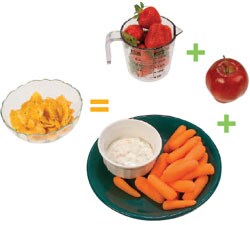
Instead of a high-calorie snack from a vending machine, bring some cut-up vegetables or fruit from home. One snack-sized bag of corn chips (1 ounce) has the same number of calories as a small apple, 1 cup of whole strawberries, AND 1 cup of carrots with 1/4 cup of low-calorie dip. Substitute one or two of these options for the chips, and you will have a satisfying snack with fewer calories.

photo of fruits and vegetables

Remember: Substitution is the key.
It’s true that fruits and vegetables are lower in calories than many other foods, but they do contain some calories. If you start eating fruits and vegetables in addition to what you usually eat, you are adding calories and may gain weight. The key is substitution. Eat fruits and vegetables instead of some other higher-calorie food.


More Tips for Making Fruits and Vegetables Part of Your Weight Management Plan

Eat fruits and vegetables the way nature provided—or with fat-free or low-fat cooking techniques.
Try steaming your vegetables, using low-calorie or low-fat dressings, and using herbs and spices to add flavor. Some cooking techniques, such as breading
and frying, or using high-fat dressings or sauces will greatly increase the calories and fat in the dish. And eat your fruit raw to enjoy its natural sweetness.

Canned or frozen fruits and vegetables are good options when fresh produce is not available.
However, be careful to choose those without added sugar, syrup, cream sauces, or other ingredients that will add calories.

Choose whole fruit over fruit drinks and juices. Fruit juices have lost fiber from the fruit.
It is better to eat the whole fruit because it contains the added fiber that helps you feel full. One 6-ounce serving of orange juice has 85 calories, compared to just 65 calories in a medium orange.

Whole fruit gives you a bigger size snack than the same fruit dried—for the same number of calories.
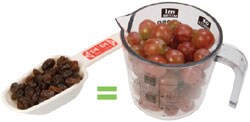
A small box of raisins (1/4 cup) is about 100 calories. For the same number of calories, you can eat 1 cup of grapes.

photo of grapes and raisins


Related Resources

Check out these Web sites for more information about how fruits and vegetables
can help you manage your weight:

FruitsandVeggiesMatter.gov

Dietary Guidelines for Americans 2005

US Department of Agriculture, Center for Nutrition Policy and Practice


Taken From : http://www.cdc.gov


Read more!

Saturday, August 23, 2008

Fashion's generation gap on show in Paris


By Rachel Sanderson

PARIS (Reuters) - The generation gap was on show at Paris Fashion Week on Wednesday with collections from Esteban Cortazar, the 23-year-old new designer at Emanuel Ungaro, and Karl Lagerfeld, the 74-year-old maestro of French fashion.

Lagerfeld, presenting his own name collection ahead of showing his Chanel creations on Friday, unveiled a show of mannish tailoring and lots of black, two styles emerging as strong trends for next fall.

But he maintained the aloofness that has helped Lagerfeld's career outlive his rivals and kept him at the top of his profession for decades.

Quizzed by reporters after the show whether he ever paid attention to fashion critics, Lagerfeld replied: "I don't read them," and remained ever impenetrable in his dark sunglasses.

At Ungaro, the body language of Cortazar, the youngest designer to lead a fashion house, could not have been more different.

Before rapper Eve in the front row, the Bogota-born, Miami-raised son of an artist and a jazz singer ran a lap around the arena-shaped catwalk at the end of the show, signaling to the audience he was wiping his brow with relief.

"It was amazing. I just want to run around and hug all my friends," Cortazar told Reuters backstage, still mopping sweat away from his face.

To Lagerfeld's directional show of darks suits and long, structured skirts, Cortazar -- who was also scheduled against top fashion names Givenchy and Christian Lacroix -- offered an alternative as far apart as their birth dates.

"LOVELY INTERPRETATION"

His show underlined the adjustment houses face with new talent when their established designer moves on.

While not revolutionary in fashion terms, his collection was classically attractive featuring soft feminine draping in a palette of a milky grey punctuated by splashes of fuchsia.

Material, whether wool or silk, was piled into sumptuous folds around models' necks or gathered up at the hemlines.

Motifs of exotics plants or pebbles patterned flimsy, barely there dresses aimed at the winter cruise crowd or those in warmer party climes such as his native Florida.

"For a first collection it was a lovely interpretation of the house of Ungaro," Ken Downing, the fashion director of U.S. department store group Neiman Marcus told Reuters. "Congratulations to him."

History has shown it is not easy for unknowns to take over from the "greats" and new faces at old houses have been a feature -- and a difficulty -- of this fashion season, reaching its end in Paris this Sunday after New York, London and Milan.

Cortazar's entry at Ungaro comes after the house burned through four designers since its founder left in 2005.

Gianfranco Ferre, whose eponymous designer died suddenly last year, presented an uneven collection in Milan last week after the designer assigned to take over quit a month before the shows because of "creative differences" with management.

Valentino, the most closely watched show in Paris this week, is another transition story. Alessandra Facchinetti will on Thursday parade her first designs since replacing Valentino Garavani who retired in January.

Facchinetti already knows too well the humiliation that can come with taking over from a maestro. She was ejected from the top creative job at Gucci after only two seasons when she failed to fill the shoes of Tom Ford.

(Editing by Alison Williams)


A model presents a creation by German designer Karl Lagerfeld as part of his Fall/Winter 2008/09 women's ready-to-wear fashion show in Paris February 27, 2008.


A model presents a creation by French designer Christian Lacroix as part of his Fall/Winter 2008/09 women's ready-to-wear fashion show in Paris February 27, 2008.

(Xinhua/Reuters Photo)


Read more!

Thursday, August 21, 2008

Music Therapists, Help People With a Wide Variety of Problems.


What is the work like?

Almost everyone can respond positively to music and sound, and this forms the basis of the work of a music therapist. Music involves communicating, listening and sharing, so music therapists use it to help people with a wide variety of problems.

The purpose of music therapy is to help clients to make positive changes in their lives and to improve their emotional well-being. Music therapy can stimulate people, help them to understand and express themselves, and improve their communication skills and their relationships with others. It can also relieve stress and help people to become more confident.

For the treatment to be successful, the therapist must build up a relationship with their client. Music-making forms the basis for communication in this close relationship.

A music therapist's role is very different from a music teacher. Instead of teaching music, they encourage clients to explore the world of sound using a range of different musical instruments and their own voices. Generally, both the client and music therapist play an active role in each session. Music is powerful in that it can convey feelings without the use of words.

A music therapist's clients or patients might include people who have:

* physical disabilities
* learning difficulties or mental health problems
* speech and language difficulties
* emotional and behavioural difficulties
* stress-related problems
* eating disorders or addictions
* serious illnesses, such as cancer or AIDS (it can assist with pain relief).

Therapists' clients could be any age, from pre-school children to elderly people. Some clients might be people who do not have particular problems, but want to use music therapy to find out more about themselves.

Working closely with clients to assess their individual needs is very important. Teenagers and elderly people will not enjoy or respond to the same kinds of music.

Music therapists might work with clients in groups or on a one-to-one basis. Where possible, music therapy sessions are held in music rooms, which are equipped with a range of good quality instruments, recording devices and CD players. The therapist usually agrees the length of the session with the individual or group.

Music therapists work closely with other professionals like nurses, physiotherapists, occupational therapists, speech and language therapists, psychiatrists, psychologists, teachers and social workers.
Hours and environment

Music therapists working in schools, hospitals and prisons usually work Monday to Friday, 9am to 5pm. Full-time and part-time work is available. Those with private clients might work in the evenings or at weekends.

They work in a variety of settings, including hospitals, schools, day centres, hospices, the community and the prison service.

A driving licence may be useful for those who need to travel to see clients.
Salary and other benefits

These figures are only a guide, as actual rates of pay may vary, depending on the employer and where people live.

Many music therapists have temporary or part-time contracts. Salary scales have in general been based on National Health Service (NHS) pay scales. New rates are being negotiated for therapists working in schools.

* A newly qualified music therapist working in the NHS might earn from £22,886 a year.
* With experience, this figure may rise to £35,000.
* A consultant NHS music therapist might earn £70,000 or more.

There are additional payments and allowances for NHS therapists working in London and the South East.
Skills and personal qualities

Music therapists need:

* to be knowledgeable about music and/or be skilled musicians
* excellent communication skills
* to be able to relate to all kinds of people
* to be able to motivate people
* to be patient - it can take a long time to see results
* to be able to understand clients' needs and think of new ways to help them.

Interests

It helps to have an interest in:

* a wide variety of musical styles, such as classical, pop and even pure percussion
* people and their individual physical and emotional problems
* the field of psychology.

Getting in

Over 500 music therapists and 100 student music therapists in the UK belong to the Association of Professional Music Therapists. There are opportunities in the NHS, local education authorities, social services departments, the prison service, and with some charitable and voluntary organisations. Some music therapists are self-employed.

Many therapists move into this career after working as music teachers or professional musicians, or from being active in different fields of work where their musical skills have previously been in the background.

Entry for young people

In order to qualify as a music therapist, it is necessary to complete a training course approved by the Health Professions Council, and then to register with the council. All final music therapy training is now required to be of Masters degree standard. It is a state registration requirement that registrants must be at least 23 years old.

Students applying for music therapy courses need a minimum of three years in higher education with a degree or diploma, usually but not necessarily in music. All applicants will have to demonstrate a high level of musical skill. Course selectors will also assess their personal insight and suitability for training.

Music therapy courses approved by the Health Professions Council can be found on its website (www.hpc-uk.org).

Students may need to fund their way through the course themselves and information on funding sources may be available from the individual institutions.

Entry for adults

Most entrants are mature candidates, since a postgraduate Masters degree or equivalent is required and the minimum age for registration is 23.
Training

Courses offer a mixture of theory and practical work. Theory can include lectures, seminars and workshops in areas like psychology, music therapy studies, group dynamics, improvisation and general musicianship. During the practical elements of the course, students spend time on placements in schools, hospitals or other centres, supervised by qualified music therapists.
Getting on

Promotion prospects for music therapists working in the NHS can be good. There may be opportunities to progress to roles that are more senior or to head of department.
Further information

Association of Professional Music Therapists (APMT), 61 Church Hill Road, East Barnet, Hertfordshire EN4 8SY. 020 8440 4153. Website: www.apmt.org

British Society for Music Therapy (BSMT), 61 Church Hill Road, East Barnet, Hertfordshire EN4 8SY. 020 8441 6226. Website: www.bsmt.org

Health Professions Council (HPC), Park House, 184 Kennington Park Road, London SE11 4BU. 020 7582 0866. Website: www.hpc-uk.org

Nordoff-Robbins Music Therapy Centre, 2 Lissenden Gardens, London NW5 1PP. 020 7267 4496. Website: www.nordoff-robbins.org.uk

Working in the NHS:

England: NHS Careers, PO Box 2311, Bristol BS2 2ZX. 0845 606 0655. Website: www.nhscareers.nhs.uk

Scotland: NHS Scotland. 0845 601 4647. Website: www.nhscareers.scot.nhs.uk

Wales: NHS Wales Careers. 01443 233 472. Website: www.wales.nhs.uk
Further reading

Arts therapist (factsheet) - NHS Careers

Careers in the allied health professions (booklet) - NHS Careers

Leaflets from the Association of Professional Music Therapists and the British Society for Music Therapy
Magazines/journals

British Journal of Music Therapy
Taken From : http://www.connexions-direct.com


Read more!

Tuesday, August 19, 2008

Stressed out? Meditation Made Easy


Stress

Stressed out? Ten minutes of meditation a day may be all you need to reduce stress.
Meditation Made Easy

By: Kate Hanley

Studies have shown that meditating can increase immunity, defuse negative emotions, lower blood pressure and reduce the effects of stress. And unlike prescription drugs, it's free and has no unpleasant side effects. But with so much information out there, how does one know where and how to begin to meditate? iVillage went to expert Joan Borysenko, PhD, a meditation practitioner for nearly 40 years and author of 11 books on the intersection of medicine, spirituality and healing, including Inner Peace for Busy Women, to get the bottom line on beginning a meditation routine.

When to Meditate
According to Dr. Borysenko, we need to meditate at least 10 minutes a day to begin reaping the benefits. Ten minutes may sound easy enough, but in our multitasking culture, carving out that time can be downright hard. Finding time is the number one obstacle to developing a regular practice. Her solution? Keep it simple. "Ask yourself, What is the minimum I can commit to that will sustain me?" Dr. Borysenko says. "Even if your default practice is five minutes, it will get you sitting. Once you're there, you will enjoy it and you'll take five more minutes."

Dr. Borysenko recommends meditating as soon as you wake up. "Set the alarm, bypass the coffeemaker and head straight for your practice," she explains. "Once you turn the coffeepot on, then you turn on the news and the next thing you know, you are absorbed in other things."

How to Begin Meditating
Once you're out of bed, head for a straight-backed chair. "The most common physical problem people face is their body is not experienced in relaxing without falling asleep," Dr. Borysenko explains. Sitting on the edge of a hard chair with your spine a few inches away from the back of the chair is a good way to keep sleepiness at bay.

To begin meditating, let your eyes close. Focus your attention on the sound of your own breathing ‑- the easiest form of meditation a new student can do, according to Dr. Borysenko. Let your belly expand on the inhale and contract on the exhale, allowing the breath deeper into your lungs and encouraging the physiological effects of relaxation. Anytime your mind begins to wander ‑- and it will, so don't be hard on yourself when you realize it has happened again ‑- gently bring it back to the sound of your breath.

Bottom Line
Just this action of focusing on your breath for 10 minutes a day is enough. "Most people make meditating overcomplicated," Dr. Borysenko says. "They think they should get up at 4:30, do a half hour of yoga, a half hour of meditation and some inspirational reading. When it becomes too exhausting, they revert to doing nothing." By learning how to maintain a simple meditation practice, we can begin to figure out how to make our busy lives less complicated as well.

Let our meditation teacher take you through a simple beginner's meditation. Click here to listen to her guided relaxation.

Taken From : http://yourtotalhealth.ivillage.com/


Read more!

Sunday, August 17, 2008

Celeb Fashion : Nicole Kidman


Nicole Kidman showed that she could be a great actress other than possesses a beautiful face.
Nicole Kidman is no longer young; she’s 40 but still showing lots of charm and personality.


Taken From : http://www.instyle.com


Read more!