Friday, September 11, 2009

New York fashion week

New York fashion week

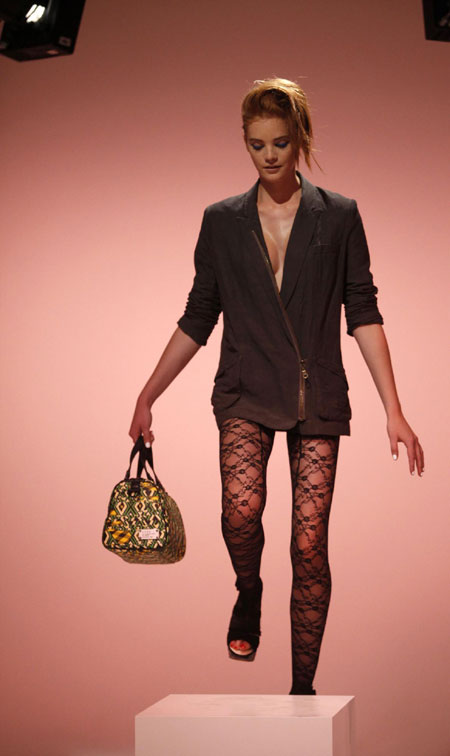
A model presents a creation from the Ports 1961 Spring 2010 collection during New York Fashion Week September 10, 2009.[Agencies]


New York fashion week

A model presents a creation from the Ports 1961 Spring 2010 collection during New York Fashion Week September 10, 2009.[Agencies]


New York fashion week

Models present creations from the Ports 1961 Spring 2010 collection during New York Fashion Week September 10, 2009.[Agencies]


New York fashion week

A model presents a creation at the Michael Angel Spring 2010 collection during New York Fashion Week, September 10, 2009.[Agencies]


New York fashion week

A model presents a creation at the Davidelfin Spring 2010 collection during New York Fashion Week September 10, 2009.[Agencies]


New York fashion week

A model presents a creation at the BCBG Max Azria Spring 2010 collection during New York Fashion Week September 10, 2009.[Agencies]


New York fashion week

A model presents a creation at the Davidelfin Spring 2010 collection during New York Fashion Week September 10, 2009.[Agencies]


New York fashion week

A model presents a creation at the Nicholas K Spring 2010 collection during New York Fashion Week, September 10, 2009.[Agencies]


New York fashion week

A model presents a creation at the BCBG Max Azria Spring 2010 collection during New York Fashion Week September 10, 2009.[Agencies]


New York fashion week

A model presents a creation at the BCBG Max Azria Spring 2010 collection during New York Fashion Week September 10, 2009.[Agencies]


taken from : China Daily


Read more!

Designer and musician Gwen Stefani at New York Fashion Week

Designer and musician Gwen Stefani at New York Fashion Week

Designer and musician Gwen Stefani talks backstage before her L.A.M.B. Spring 2010 collection during New York Fashion Week, September 10, 2009. [Agencies]


Designer and musician Gwen Stefani at New York Fashion Week

Designer and musician Gwen Stefani (C) stands with models during a presentation of her L.A.M.B. Spring 2010 collection during New York Fashion Week, September 10, 2009. [Agencies]


Designer and musician Gwen Stefani at New York Fashion Week

A model presents a creation from the L.A.M.B. Spring 2010 collection during New York Fashion Week, September 10, 2009. [Agencies]


Designer and musician Gwen Stefani at New York Fashion Week

A model presents a creation during the L.A.M.B. Spring 2010 collection at New York Fashion Week, September 10, 2009. [Agencies]


Designer and musician Gwen Stefani at New York Fashion Week

A model presents a creation during the L.A.M.B. Spring 2010 collection at New York Fashion Week, September 10, 2009. [Agencies]


Designer and musician Gwen Stefani at New York Fashion Week

A model presents a creation from the L.A.M.B. Spring 2010 collection during New York Fashion Week, September 10, 2009. [Agencies]


Designer and musician Gwen Stefani at New York Fashion Week

A model presents a creation from the L.A.M.B. Spring 2010 collection during New York Fashion Week, September 10, 2009. [Agencies]


Designer and musician Gwen Stefani at New York Fashion Week

Models present creations from the L.A.M.B. Spring 2010 collection during New York Fashion Week, September 10, 2009. [Agencies]


Designer and musician Gwen Stefani at New York Fashion Week

Models present creations from the L.A.M.B. Spring 2010 collection during New York Fashion Week, September 10, 2009. [Agencies]


Designer and musician Gwen Stefani at New York Fashion Week

Shoes are presented from the L.A.M.B. Spring 2010 collection during New York Fashion Week, September 10, 2009. [Agencies]


taken from : China Daily


Read more!

Thursday, September 10, 2009

NY Fashion Week to push stylish consumers to spend

NY Fashion Week to push stylish consumers to spend

Customers wait in line at an Aeropostale store in New York August 20, 2009.[Agencies]

NEW YORK - New York's Fashion Week kicks off on Thursday with a very simple message for style-conscious consumers -- spend, spend, spend.

Designers are hoping to inspire consumer confidence as they reevaluate how the industry operates during the worst U.S. recession in some 70 years, which has seen sales at American retailers fall every month for the past year.

The semi-annual Fashion Week in New York -- followed by fashion weeks in London, Milan and Paris -- is aimed at retailers and media to look at upcoming fashion but consumers have to wait six months for the new styles.

"Fashion Week has confused consumers," said Diane von Furstenberg, designer and head of the Council of Fashion Designers of America. "They see things in the newspaper, then go to the store and see completely different things."

While the designs for spring and summer 2010 will appear this week, many shops are filled with clothes for fall and winter. Yet temperatures are still warm, and those clothes will likely be discounted by the time the cooler weather arrives.

Along with the conflicting styles, the weak economy has many reevaluating such issues as delivery dates, said Fern Mallis, senior vice president of IMG Fashion, which runs the New York event officially known as Mercedes-Benz Fashion Week.

They must weigh getting items to big department stores early to please customers against clothes that arrive so early no one is ready to buy them, she said. "Sometimes it takes you getting down to the bottom to relook at it all," she said.

Von Furstenberg suggested shipping fewer clothes more often. "It's important for everybody to shrink the offering, make it more exciting and maybe make it more often," she said.

FASHION GLOSS

With U.S. unemployment at 9.7 percent, a 26-year high, consumers have pulled back dramatically on spending.

"It's a very, very challenging time," designer Zac Posen said. "But I think imagination and perfection prevail."

The average U.S. consumer purchased 64 articles of clothing and seven pairs of shoes in 2008, down from 67 articles of clothing and eight pairs of shoes in 2007, according to the American Apparel and Footwear Association.

"The recession has been very, very frightening," designer Vera Wang told Reuters.

More than 60 designers will be showing at Mercedes-Benz Fashion Week -- roughly the same number as those who showed fall and winter lines last February.

Mallis said she does not feel as much economy-driven worry as she did six months ago. "It's almost eerily okay," she said. "Maybe that's what fashion's about -- putting on this facade and this gloss over everything and making it look fabulous."


In New York, fashion is the second largest industry behind finance. The city is headquarters to more than 800 fashion companies, employing 175,000 people and generating $10 billion in total wages.

"It's up to the fashion industry to put it best foot forward and create things that will make everybody go, 'God damn, I have to buy that,'" Mallis said.

U.S. designer Marc Jacobs said his show would be less elaborate and he is offering items at a broader price range.

"We're all just trying to be a little more responsible," Jacobs said. "We have just tried to offer more, so that there's more possibility for more people to afford things."

To try to get consumers shopping, New York's fashion shows kick off with "Fashion's Night Out" on Thursday, an initiative by U.S. Vogue magazine editor Anna Wintour.

"The most important thing is to get people into the stores shopping and feeling good about it," Wintour told Reuters.

Vogue is organizing stores to stay open late to "celebrate fashion" in New York, Britain, Greece, Italy, Russia, France, Brazil, India, Spain, China, Germany and Japan.

The event aims to get people shopping now, even though the styles shown will not be in stores for months.

"We need to engage the customer and make her realize how important it is that she's not shopping for herself, but shopping to make a difference in the world and holding on to an industry that's imperative," said designer Donna Karan.

taken from : China Daily


Read more!

Researchers find prostate cancer stem cell

Researchers find prostate cancer stem cell

A prostatic cancer cell in an undated microscopic image.[Agencies]

WASHINGTON - Researchers have found a stem cell, a kind of master cell, that may cause at least some types of prostate cancer.

Their findings are only experimental -- the stem cells were found in mice -- but could explain at least some types of prostate cancer and eventually offer new ways to treat it, they reported on Wednesday in the journal Nature.

The findings also show a potential new source for prostate tumors -- so-called luminal cells, which secrete various compounds used in the prostate.

"The role of stem cells in the development of prostate cancer has been a focus of speculation for many years," Dr. Helen Rippon of Britain's Prostate Cancer Charity said in a statement.

"Importantly, this new stem cell does not rely on androgens -- the male sex hormones that control prostate growth -- to survive and grow. This may give a clue as to why prostate cancer often becomes resistant to treatments designed to regulate these androgens in the later stages of the disease," added Rippon, who was not involved in the research.

"This improved knowledge will also be a step forward in learning how we might help to prevent the disease from developing in men in the first place."

Michael Shen of Columbia University Medical Center and colleagues named the new stem cells CARNs, for castration-resistant Nkx3.1-expressing cells.

They normally regenerate part of the tissue that lines the inside of the gland, which produces semen. But the cells can also form tumors if certain genes meant to stop out-of-control growth get turned off.

Shen said researchers had believed that tumors arise from a different layer of cells in the prostate, called basal cells.

"Previous research suggested that prostate cancer originates from basal stem cells, and that during cancer formation these cells differentiate into luminal cells," Shen said in a statement. "Instead, CARNs may represent a luminal origin for prostate cancer."

Prostate cancer is the second most common cancer in men worldwide after lung cancer, killing 254,000 men a year globally.


taken from : China Daily


Read more!

Mode City trade show

Mode City trade show

A model presents a swimsuit during Mode City trade show in Paris, September 7, 2009.[Agencies]


Mode City trade show

A model presents a swimsuit during Mode City trade show in Paris, September 7, 2009.[Agencies]


Mode City trade show

A model presents a swimsuit during Mode City trade show in Paris, September 7, 2009.[Agencies]


Mode City trade show

A model presents a swimsuit during Mode City trade show in Paris, September 7, 2009.[Agencies]


Mode City trade show

Models present swimsuits during Mode City trade show in Paris September 7, 2009.[Agencies]


Mode City trade show

A model presents a swimsuit during Mode City trade show in Paris, September 7, 2009.[Agencies]


Mode City trade show

A model presents a swimsuit during Mode City trade show in Paris, September 7, 2009.[Agencies]


Mode City trade show

A model presents a swimsuit during Mode City trade show in Paris, September 7, 2009.[Agencies]


taken from : China Daily


Read more!

Kate Beckinsale arrives at the premiere of the film "Whiteout" in L.A.

Kate Beckinsale arrives at the premiere of the film

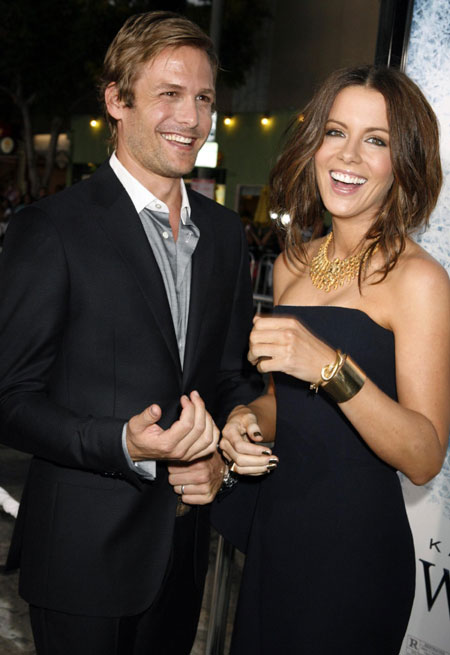
Actress Kate Beckinsale (R) poses with co-star Gabriel Macht as they arrive at the premiere of their new film "Whiteout" in Los Angeles September 9, 2009. [Agencies]


Kate Beckinsale arrives at the premiere of the film

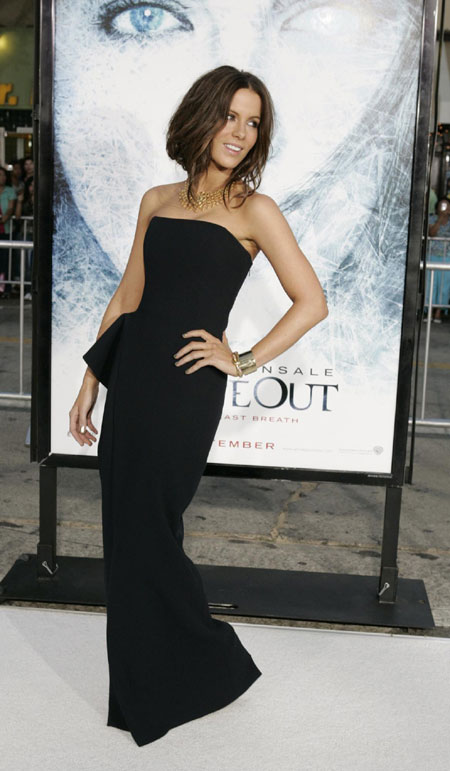
Actress Kate Beckinsale arrives at the premiere of her new film "Whiteout" in Los Angeles September 9, 2009. [Agencies]


Kate Beckinsale arrives at the premiere of the film

Actress Kate Beckinsale arrives at the premiere of her new film "Whiteout" in Los Angeles September 9, 2009. [Agencies]


Kate Beckinsale arrives at the premiere of the film

Actress Kate Beckinsale arrives at the premiere of her new film "Whiteout" in Los Angeles September 9, 2009. [Agencies]


Kate Beckinsale arrives at the premiere of the film

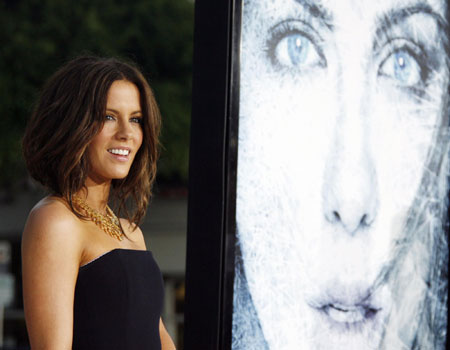
Actress Kate Beckinsale smiles at the premiere of her new film "Whiteout" in front of the film's poster featuring her face in Los Angeles September 9, 2009.[Agencies]


Kate Beckinsale arrives at the premiere of the film

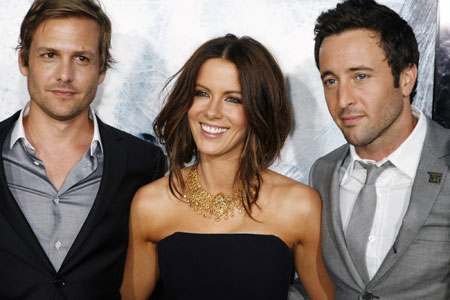
Actress Kate Beckinsale (C) poses with co-stars actors Gabriel Macht (L) and Alex O'Loughlin as they arrive at the premiere of their new film "Whiteout" in Los Angeles September 9, 2009. [Agencies]


Kate Beckinsale arrives at the premiere of the film

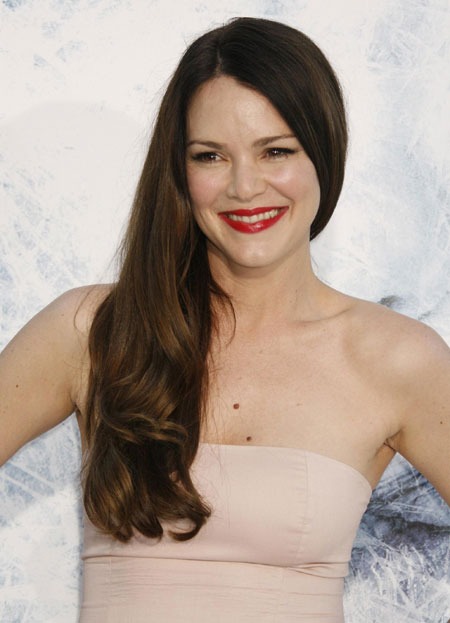
Dancer Lacey Schwimmer arrives as a guest for the premiere of the new film "Whiteout" in Los Angeles September 9, 2009. [Agencies]


Kate Beckinsale arrives at the premiere of the film

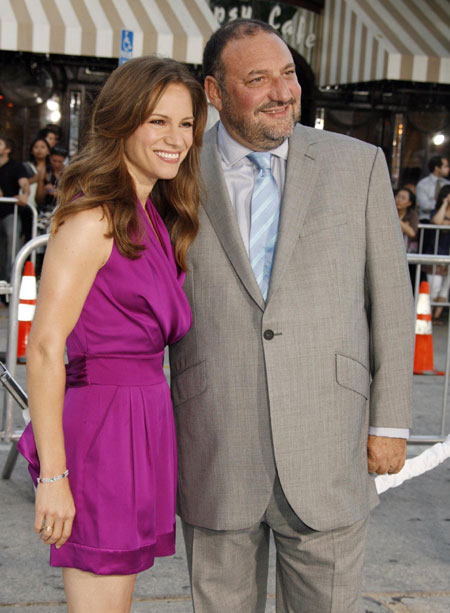
Producers Susan Downey and Joel Silver (R) arrive at the premiere of their new film "Whiteout" in Los Angeles September 9, 2009. [Agencies]


Kate Beckinsale arrives at the premiere of the film

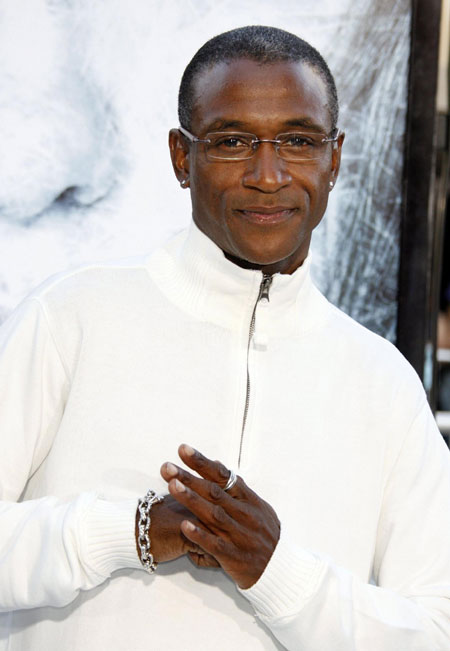
Comedian Tommy Davidson arrives as a guest for the premiere of the new film "Whiteout" in Los Angeles September 9, 2009. [Agencies]


Kate Beckinsale arrives at the premiere of the film

Australian actress Jacinda Barrett poses at the premiere of the film "Whiteout"in Los Angeles September 9, 2009. [Agencies]


taken from : China Daily


Read more!

Wednesday, September 9, 2009

Early daycare may not lower asthma risk

Early daycare may not lower asthma risk

An inhaler is seen in this undated handout photo.[Agencies]

NEW YORK - Contrary to what some previous studies have suggested, children who enter daycare at an early age may not have a reduced risk of allergies and asthma later on, researchers reported Tuesday.

In a study of more than 3,600 children followed from birth, the investigators found that children who entered daycare before the age of 2 were no less likely than their peers to suffer from allergies or asthma at the age of 8.

But early daycare did not appear to raise those risks either, senior researcher Dr. Johan C. de Jongste, of Erasmus University in Rotterdam, the Netherlands, told Reuters Health in an email.

Instead, the findings suggest that daycare has little long-term effect on children's respiratory health -- and that it should not be seen as a way to protect them from allergies and asthma down the road, the researchers report in the journal American Journal of Respiratory and Critical Care Medicine.

The study, de Jongste said, challenges what is known as the "hygiene hypothesis" -- the theory that the increasingly germ-free surroundings of modern life are actually contributing to an increase in allergies and asthma.

Some researchers speculate that exposure to viruses and other bugs at daycare may help push a young child's immune system toward infection-fighting mode, and away from a tendency to over-react to the normally benign substances -- the basis of allergic conditions.

Along with daycare attendance, certain other factors that suggest greater early-life exposure to infections -- like having older siblings -- have also been linked to lower risks of childhood allergies and asthma.

But in the current study, neither daycare nor the presence of older siblings showed long-term effects.

Of the 3,643 children followed from birth to age 8, 30 percent started daycare before age 2. These children were twice as likely as the rest to suffer breathing difficulties in the first year of life.

But the pattern shifted with time, and by the age of 8, early-daycare children were no more -- or no less -- likely to have episodes of wheezing or other signs or symptoms of asthma. Nor did early daycare affect the risk of showing reactions to airborne allergens during allergy testing.

Children with older siblings were also more likely to have wheezing symptoms in the first year of life, but were no more or no less likely to have signs or symptoms of allergies or asthma at age 8.

The findings, de Jongste's team writes, suggests that early daycare simply "shifts the burden" of respiratory symptoms to an earlier age, with no tradeoff of protective effects later on.

"Hence," they conclude, "early daycare should not be promoted for reasons of preventing allergy and asthma."


taken from : China Daily


Read more!

Asian social networking sites profit from virtual money

Asian social networking sites profit from virtual money

A customer looks at a web page of Qzone, a Chinese social networking site at an internet cafe in Changzhi, Shanxi province, August 28, 2009.[Agencies]

SINGAPORE - By selling an array of virtual products from avatar clothes to e-furniture, Asia's social networking sites appear to have solved the conundrum of how to leverage big profits from their extensive user bases.

It's simple, they say, the money might be virtual but the profits are all too real.

Chinese university student Tan Shengrong spends about 20 yuan ($2.90) per month purchasing outfits for her pet penguin avatar or playing games on QQ, an instant message portal on Qzone, China's most popular social networking site.

It might not seem like a hefty sum, but every fen, or cent, is money in the bank for Tencent Holdings, which owns Qzone and saw an 85 percent increase in its second quarter net profit this year compared to 2008 despite the economic downturn.

"They keep growing even though the economy's bad because they keep making millions from cents from millions and millions of people," said Benjamin Joffe, head of Internet consulting firm Plus Eight Star.

From virtual clothes to e-pets, Asians spend an estimated $5 billion a year on virtual purchases via websites such as Qzone, Cyworld in South Korea and mobile-phone based network Gree in Japan, according to Plus Eight Star. That's about 80 percent of the global market for virtual products, it says.

"Social networking is just a way to get people together, but if you want revenue you have to sell them something. What they found was that people were happy to pay for content related to emotion, status and entertainment," said Joffe.

Of the virtual sales in Asia, about 80 percent comes from the sale of such items as equipment for online games such as rods for GREE's fishing game Tsuri Star 2. The rest comes from purchases for avatars on social networking sites.

Such is the success of virtual sales on Asia's most popular social networking sites that Myspace and Facebook are starting to look with a fresh eye at the potential of virtual money to generate cold hard cash.

Qzone's Tencent Holdings made over $1 billion last year with just 13 percent coming from advertising revenue. In contrast, Facebook and Myspace depend on advertising to fund most of their revenue.

The evolution of virtual money on social networking sites in Asia is partly due to a less developed online advertising market which drove Asian web businesses to seek new ways to profit.

Cultural issues are at play too. Gaming is popular among adults in Asia, whereas in the West it tends to be only for kids.

East Asian societies are also very status conscious. Players are loath to be the only avatar without the latest gear and Asians are perhaps more willing than counterparts in the West to buy virtual products to update their avatars or social space.

Asia's social networking sites tend to be country specific but they have very active user bases.

Qzone had 228 million active user accounts for the second quarter of 2009, although it won't give out monthly visitor figures. Meanwhile, Cyworld, which says that 90 percent of South Korea's 20-somethings are members, had 23 million unique visitors per month at the end of the first quarter of 2009.


VIRTUAL RENTALS

Like their Western counterparts, Asian social networking sites allow their users to chat, play games and share photos.

There is also some advertising, but the sites earn most of their revenues from their users. Members are represented by avatars and acquire virtual currency from the sites to buy digital goods, game packages or upgrades.

The model has taken off abroad but there is still a long way to go until the West catches up with Asia.

Habbo, a social networking site for teenagers owned by Finland's Sulake Corporation, sells virtual clothes and furniture. Meanwhile, games such as Pet Society which is available on Facebook and allows users to raise virtual pets, sells goods such as virtual pet accessories and e-food.

Playfish, creator of Pet Society and other social games, says it has 47 million active users per month playing its games.

With seven million or so inhabitants, the virtual world Second Life offers a range of e-wares for sale for Linden dollars. Some are mundane and others are controversial such as guns and virtual phalluses with price tags based on the size.

Asia is also a playground for a range of virtual business models such as rentals. For example, Cyworld rents background skins of popular South Korean baseball players for limited periods. Such rentals drive repeat sales and tap into trends.

LOST IN TRANSLATION

The success of these East Asian sites contrast sharply to the frustrated social media landscape across the Pacific where despite immense popularity, Facebook and Myspace are yet to fully harness the profit potential of their massive user bases.

Facebook, the world's biggest social network with close to 300 million visitors per month, is on track to bring in more than $500 million in revenue this year, mostly from advertising, but its focus is on growing its user base rather than making money.

Still, a recent New York Times article suggested signs of an exodus from Facebook as disillusioned users leave due to privacy concerns or complaints of rampant commercialism.

Rupert Murdoch's MySpace has been unusual among the major social networks in turning profitable through advertising sales, although is now undergoing a major overhaul, including ousting its CEO and firing hundreds of staff, in the face of worrying user metrics.


Meanwhile, both Facebook and MySpace are eyeing the virtues of virtual money. Facebook, which sells virtual goods mainly in the form of 'Facebook gifts' through a credit system, said in March that it was looking at offering a common virtual currency to third-party application developers.

At the Web 2.0 Summit late last year, Myspace's recently-departed chief operating officer Amit Kapur mentioned that that the firm was also seeking to develop a payments and virtual goods system.

Meanwhile, Internet entrepreneurs are coming to Asia to pick up on innovative web business models.

In June, 32 venture capitalists and Internet entrepreneurs visited Japan and China under the banner "GeeksOnAPlane," to learn about local success stories such as DeNA, video hosting website Tudou, and gaming website PopCap.

"They were all blown away even though some of them already knew about what was going on here," said George Godula, founder of Shanghai-based consultancy Web2Asia. "They (Asian social networking sites) are quite nimble at finding out business models or ways of how to make money," he told Reuters.


taken from : China Daily


Read more!

H1N1 flu stops Italians kissing saint's blood

H1N1 flu stops Italians kissing saint's blood

A woman kisses a phial of what local Roman Catholics believe is the blood of Saint Gennaro at the Duomo in Naples in this December 16, 2006 file photo. [Agencies]

NAPLES, Italy - Fear of H1N1 flu will stop devout Neapolitans from performing the time-honored ritual of kissing the blood of their patron Saint Gennaro when the city's annual festival begins later this month.

The decision to forbid kissing of the glass vial containing the saint's blood was taken reluctantly by ecclesiastical and city authorities Monday, and has brought protests from local politicians.

The vial will be put on display in the city's cathedral for a week from September 19 and the faithful will be allowed to touch it only with their foreheads.

Marco Di Lello, national co-ordinator of the Socialist Party, said the ban would "fuel the psychosis (over flu) which risks becoming unstoppable," and appealed to the archbishop of Naples to try to have the ban revoked.

Last week, a 51-year-old man became Italy's first fatal victim of the H1N1 flu virus, popularly known as swine flu, when he died in a Naples hospital.

In one of Italy's best-known festivals, Saint Gennaro's dried blood is said to liquefy twice a year, 17 centuries after his death. Some Neapolitans fear disaster may strike the city if the "miracle" does not occur.

Legend has it that when Gennaro was beheaded by pagan Romans in 305 A.D., a Neapolitan woman soaked up his blood with a sponge and preserved it in a glass vial.

The substance usually turns to liquid on September 19, the saint's feast day, and on the first Saturday in May. The "miracle" was first recorded in 1389, more than 1,000 years after Gennaro's martyrdom.

More scientifically minded skeptics say the phenomenon is due to chemicals present in the vial whose viscosity changes when it is stirred or moved.

Italy has not been among the nations hardest hit by the H1N1 flu virus, which has spread to at least 177 countries and caused at least 2,800 deaths, the World Health Organization says.


taken from : China Daily


Read more!

China faces grim situation as H1N1 escalates: minister

China faces grim situation as H1N1 escalates: minister

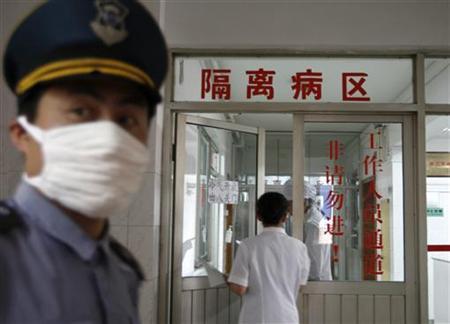
A security personnel guards the entrance to an isolation ward where a patient, who is suspected to have the H1N1 flu, is staying, at a hospital in Guangzhou, Guangdong province May 18, 2009.[Agencies]

BEIJING - China faces a grim situation in containing the H1N1 strain of flu, as schools start up again and the number of domestic cases, as well as clusters of cases, rises, China's Minister of Health said on Tuesday.

China has reported 5,592 cases of H1N1 flu, from which 3,852 people have recovered. No-one has died in China, although a patient in Shanghai is in a coma, with multiple organ failure.

"There are some recent developments in H1N1 in China that mean we are facing a grim situation," said Chen Zhu, one of only two ministers in China who do not belong to the Communist Party.

He listed a rapid surge in domestic cases, after an initial phase when most cases in China were of foreigners who arrived with the disease. Since the beginning of September, there has also been a spike in the number of clusters of outbreaks, which now number 128.

Finally, there has been an increase in the number of confirmed H1N1 cases among people with flu symptoms.

Chen said the Shanghai patient, as well as another serious case in Zhejiang province, had stabilized.

China plans to begin rolling out a vaccination program this week, Chen said, with priority going to children, health care workers, the military and the public security apparatus.

"With 1.3 billion people, we are limited in our ability to provide vaccines for all," Chen said.

"Therefore, we have to continue with protective measures, especially the ability of the population to protect itself."

The Chinese government on Friday ordered 7.3 million doses of vaccines for the H1N1 strain of flu from domestic firms Sinovac Biotech and Hualan Biological.


taken from : China Daily


Read more!

Queen of the catwalk editors? Vogue's Anna Wintour: Forbes

Queen of the catwalk editors? Vogue's Anna Wintour: Forbes

Anna Wintour, Editor-in-chief of American Vogue, watches from the crowd as Roger Federer of Switzerland plays Simon Greul of Germany during their match at the U.S. Open tennis tournament in New York, September 2, 2009.[Agencies]

NEW YORK -When it comes to swaying the followers of fashion, it's hard to fill the designer shoes of Vogue Editor-in-Chief Anna Wintour this year.

Wintour has been crowned 2009's most powerful fashion editor in America in a Forbes magazine ranking, compiled as fashion magazines battle to survive a sharp downturn in magazine advertising and the recession cuts consumer spending.

Wintour, who has an icy reputation and usually shuns interviews, has been on a media blitz to promote fashion documentary "The September Issue" by director R.J. Cutler which followed her Vogue team for almost nine months in 2007.

This publicity put Wintour, with her trademark bobbed hair and black Chanel sunglasses, a head above her rivals who sit alongside her in the critical front-row of fashion shows.

"With more media mentions and the highest year-over-year increase in circulation, there's no denying Anna Wintour has been at the forefront of the retail and fashion industry conversation over the last year," said Forbes.

Wintour, who was believed to have inspired the cut-throat editor played by Meryl Streep in the movie "The Devil Wears Prada," took first place in the annual Forbes list after coming second last year.

The Forbes list looks at which fashion magazine editor has the most sway over the fashion industry and the $200 billion U.S. clothing and accessories retail industry.

Following her down the catwalk of power in second slot was Glamour's Cindi Leive who topped the list last year after leading the magazine to its highest circulation ever and boosting Glamour.com's traffic.

In the third spot came Elle's Roberta Myers, who tied second with Wintour last year, followed by More's Leslie Jane Seymour, then Allure's Linda Wells, and then Ann Shoket from Seventeen.

Rounding out the top 10 were Marie Claire's Joanna Coles, who won praise for her initiative in appointing "Project Runway" judge Nina Garcia as a fashion director, Cosmopolitan's Kate White, In Style's Ariel Foxman, and Harper's Bazaar Glenda Bailey.

Forbes said for its list of America's most influential fashion editors it considered the top editors of every U.S. monthly magazine that features a fair amount of fashion.

The ranking was compiled by looking at monthly unique user numbers for each magazine website, advertising revenue for the first half of 2009 and the number of advertising pages compared with a year ago, and the year-over-year change in circulation.

But it also looked as how many times each editor's name was found on Google and Factiva, and this is where Wintour led the pack.

"These media mentions were particularly important in 2009, as nearly every editor on our list has pushed hard for more publicity as the economy -- and ad sales -- slipped," said Forbes.

But Wintour was deemed to have a weakness in her leadership of Vogue, a Conde Nast magazine -- her online presence.

Forbes said Style.com -- home to Vogue's online content -- saw its number of unique users in July decrease year-over-year by 9 percent to 344,189, according to Comscore.

"While Style.com is a popular site within the fashion industry, it's failed thus far to reach a mass audience," said Forbes.


taken from : China Daily


Read more!

Paris Hilton sighted at Heathrow Airport

Paris Hilton sighted at Heathrow Airport

Paris Hilton and Doug Reinhardt were seen September 7 as the two made their way through London’s Heathrow Airport on their way home to L.A. [Agencies]


Paris Hilton sighted at Heathrow Airport

Paris Hilton and Doug Reinhardt were seen September 7 as the two made their way through London’s Heathrow Airport on their way home to L.A. [Agencies]


Paris Hilton sighted at Heathrow Airport

Paris Hilton and Doug Reinhardt were seen September 7 as the two made their way through London’s Heathrow Airport on their way home to L.A. [Agencies]


Paris Hilton sighted at Heathrow Airport

Paris Hilton and Doug Reinhardt were seen September 7 as the two made their way through London’s Heathrow Airport on their way home to L.A. [Agencies]


taken from : China Daily

Read more!

George Clooney attends the photocall at Venice

George Clooney attends the photocall at Venice

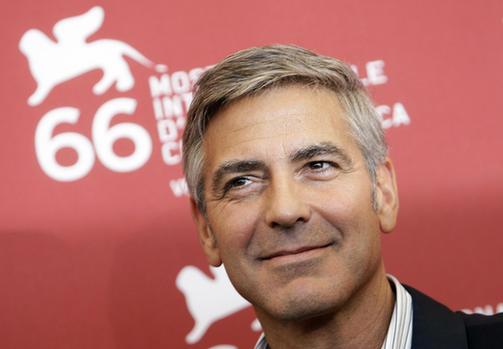
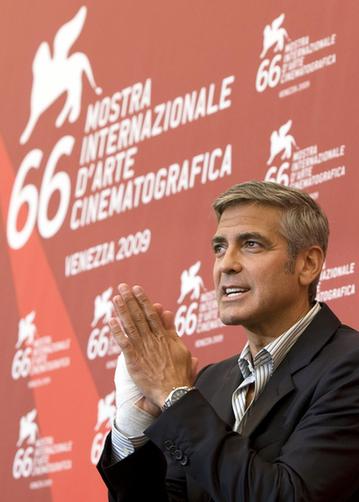
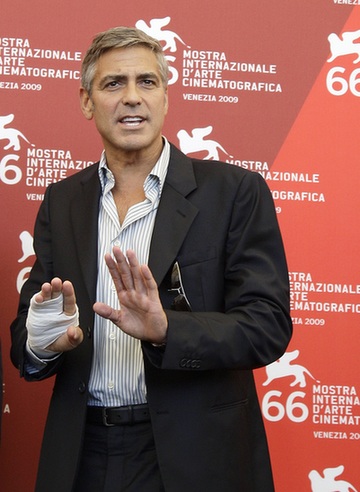
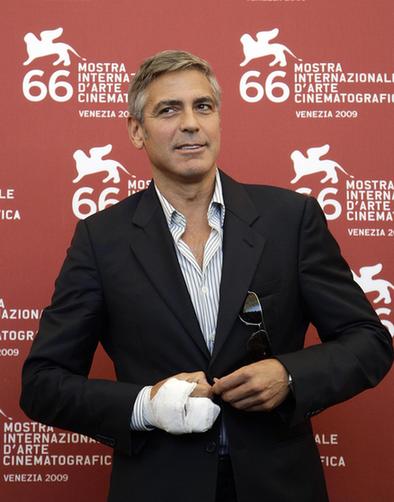
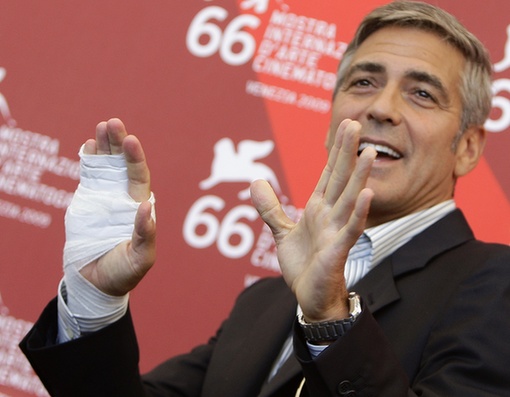
Actor George Clooney attends the "The Men Who Stare At Goats" photocall during the 66th Venice Film Festival September 8, 2009.[Agencies]


George Clooney attends the photocall at Venice

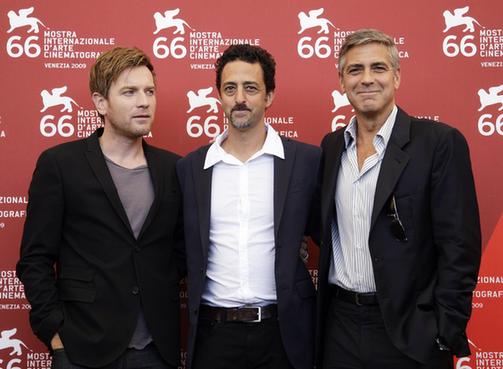
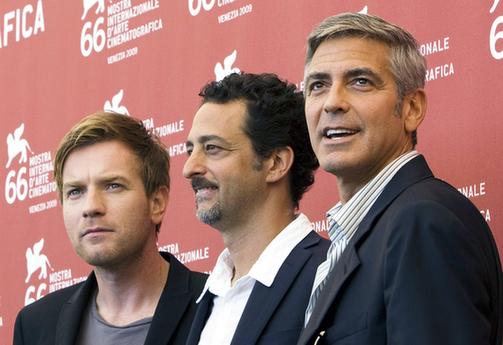
Actors Ewan McGregor (L), George Clooney (R) and director Grant Heslov attend the "The Men Who Stare At Goats" photocall during the 66th Venice Film Festival September 8, 2009.[Agencies]


George Clooney attends the photocall at Venice

Actor George Clooney attends "The Men Who Stare At Goats" photocall during 66th Venice Film Festival.[Agencies]


George Clooney attends the photocall at Venice

Actor George Clooney attends the "The Men Who Stare At Goats" photocall during the 66th Venice Film Festival September 8, 2009.[Agencies]


George Clooney attends the photocall at Venice

Actor George Clooney attends the "The Men Who Stare At Goats" photocall during the 66th Venice Film Festival September 8, 2009.[Agencies]


George Clooney attends the photocall at Venice

Actor Ewan McGregor (L) and director Grant Heslov (C) and George Clooney (R) attend the "The Man Who Stare At Goats" photocall at the Palazzo del Casino during the 66th Venice Film Festival September 8, 2009.[Agencies]


George Clooney attends the photocall at Venice

Actor George Clooney attends the "The Men Who Stare At Goats" photocall during the 66th Venice Film Festival September 8, 2009.[Agencies]

George Clooney attends the photocall at Venice

Director Grant Heslov (C) and actors Ewan McGregor (L) and George Clooney attend the "The Men Who Stare At Goats" photocall at the Palazzo del Casino during the 66th Venice Film Festival September 8, 2009.[Agencies]


taken from : China Daily


Read more!