Tuesday, September 8, 2009

Mini-skirt madness

Mini-skirt madness

Models participate in a fashion parade organized by Argentine hairstylist Roberto Giordano in Punta del Este in this January 13, 2007 file photo.[Agencies]

Mini-skirt madness

A model presents a creation of Spanish designer Agatha Ruiz de la Prada during the second day of Albania Fashion Week in Tirana, November 8, 2008.[Agencies]

Mini-skirt madness

Katy Perry performs at the 51st annual Grammy Awards in Los Angeles, February 8, 2009.[Agencies]

Mini-skirt madness

A model presents a polka dot mini skirt worn with a wolf fur jacket as part of British designer John Galliano's Autumn/Winter 2002-2003 ready-to-wear collection he designed for Dior in Paris, March 7, 2002.[Agencies]

Mini-skirt madness

A model wears a black and white print pleated mini skirt with a cropped light purple and silver satin trimmed poppy and ribbon print top during the presentation of the Anna Sui Spring 2004 Collection in New York on September 17, 2003.[Agencies]

Mini-skirt madness

Nadine shows off a ski vest in white over wool men's shirt in cream with silk taffeta buffalo plaid mini pouf skirt on the runway at designer Alice Roi's Fall 2003 fashion show in New York on February 9, 2003.[Agencies]

Mini-skirt madness

Models walk the runway for designer Tommy Hilfiger during the the 13th annual Race to Erase MS gala in Century City, California April 13, 2007.[Agencies]


taken from : China Daily


Read more!

Monday, September 7, 2009

H1N1 has killed 2,837, but not more serious: WHO

H1N1 has killed 2,837, but not more serious: WHO

A drawing of a pig decorates the door of a lab where samples are tested for the H1N1 swine flu virus at the Maryland Department of Health and Mental Hygiene in Baltimore, September 3, 2009.[Agencies]

The pandemic H1N1 flu virus continues to cause widespread infection in many parts of the world but is not becoming more serious, the World Health Organization (WHO) said on Friday.

The WHO said it had counted 2,837 deaths worldwide but noted that not every case was being counted any more.

The United Nations agency is closely monitoring the strain, commonly known as swine flu, but said it had not detected any mutation which might signal that it has become more deadly.

"It is not causing more severe illness than before, there have been no changes in the behavior of the virus," WHO spokesman Gregory Hartl told a news briefing.

"We are continuing to see increased number of deaths because we are seeing many, many more cases."

About a quarter of a million cases have been laboratory-confirmed worldwide, but this is far fewer than the true number according to the WHO which has stopped requiring its 193 member states to report individual cases.

Its previous update of August 28 showed at least 2,185 deaths, meaning an additional 652 deaths were reported in the past week.

The virus could eventually infect 2 billion people, or a third of the world's population, according to WHO estimates.

Every year, seasonal influenza kills between 250,000 and 500,000 people globally, it says. But H1N1 is causing a year-round flu season and may infect more people than a usual seasonal virus, potentially adding up to more deaths.

"In the best case scenario we have today, we will still have a moderate virus that is projected to cause several million deaths," Dr. Tammam Aloudat, senior health officer at the International Federation of Red Cross and Red Crescent Societies, told a separate news briefing.

"Which means that even in the best case scenario, we do have an emergency on our hands, an emergency of a scale different from what we have seen before in the modern era," he said.

The Federation, the world's largest disaster relief network, on Friday launched an information campaign to help the poorest communities reduce infection through simple hygiene measures.

H1N1, declared a pandemic on June 11, causes many mild symptoms, but has killed more people with medical conditions, such as asthma, or pregnant women, who should be treated with the antiviral Tamiflu by Roche Holding AG, WHO says.


H1N1 has killed 2,837, but not more serious: WHO

Lead scientist Heather Peters uses a microscope to check cultures for signs of the H1N1 swine flu virus and other respiratory diseases at the Maryland Department of Health and Mental Hygiene in Baltimore, September 3, 2009.[Agencies]

PREDOMINANT VIRUS

Tropical regions of many countries in South and Southeast Asia are reporting "increasing or sustained high levels of respiratory disease," although Thailand has reported a declining trend, according to the WHO's latest weekly update.

In Latin America, countries including Ecuador, Venezuela, Peru and Brazil are reporting more respiratory disease, while outbreaks seem to have peaked in Chile and Argentina, it said.

Japan is seeing an early start to its regular flu season. In Canada and the United States, influenza activity remains "low overall," despite increases in the southeastern U.S. region.

Drugmakers are racing to develop vaccines amid experts' warnings that a "second wave" of the virus is approaching as weather cools in the northern hemisphere and the traditional flu season starts.

On Thursday, Novartis AG said a single dose of its vaccine might protect against the virus, raising hopes that potentially tight supplies could go further when mass immunization starts this month.

Hartl has called the preliminary results "encouraging," noting any vaccine that can be administered in one dose would substantially increase the number of overall doses available.


taken from : China Daily


Read more!

Chinese stars arrive on the red carpet during the 'Lei Wangzi' premiere at Venice

Chinese stars arrive on the red carpet during the 'Lei Wangzi' premiere at Venice

Actresses Terri Kwan (R) and Xuan Zhu pose for photographers as they arrive on the red carpet during the 'Lei Wangzi' (Prince of Tears) premiere at the 66th Venice Film Festival September 4, 2009. [Agencies]


Chinese stars arrive on the red carpet during the 'Lei Wangzi' premiere at Venice

Actresses Terri Kwan (R) and Xuan Zhu pose for photographers as they arrive on the red carpet during the 'Lei Wangzi' (Prince of Tears) premiere at the 66th Venice Film Festival September 4, 2009. [Agencies]


Chinese stars arrive on the red carpet during the 'Lei Wangzi' premiere at Venice

(L to R) Actors Fan Chih-wei, Terri Kwan, Xuan Zhu and Joseph Chang pose for photographers during their arrival on the red carpet during the "Lei Wangzi" (Prince of Tears) premiere at the 66th Venice Film Festival September 4, 2009. [Agencies]


Chinese stars arrive on the red carpet during the 'Lei Wangzi' premiere at Venice

Film director Yon Fan (C) and actresses Terri Kwan (R) and Xuan Zhu (L) pose for photographers as they arrive on the red carpet during the 'Lei Wangzi' (Prince of Tears) premiere at the 66th Venice Film Festival September 4, 2009. [Agencies]


Chinese stars arrive on the red carpet during the 'Lei Wangzi' premiere at Venice

(L to R) Actors Fan Chih-wei, Terri Kwan, Xuan Zhu and Joseph Chang pose for photographers as they arrive on the red carpet during the 'Lei Wangzi' (Prince of Tears) premiere at the 66th Venice Film Festival September 4, 2009. [Agencies]


Chinese stars arrive on the red carpet during the 'Lei Wangzi' premiere at Venice

Actors Fan Chih-wei (2nd R), Terri Kwan (R), Xuan Zhu (L) and Joseph Chang (2nd L) arrive on the red carpet during the 'Lei Wangzi' (Prince of Tears) premiere at the 66th Venice Film Festival September 4, 2009. [Agencies]


Chinese stars arrive on the red carpet during the 'Lei Wangzi' premiere at Venice

Actress Terri Kwan poses for photographers on the red carpet during the 'Lei Wangzi' (Prince of Tears) premiere at the 66th Venice Film Festival September 4, 2009. [Agencies]


taken from : China Daily


Read more!

Michael Moore attends a photocall at the 66th Venice Film Festival

Michael Moore attends a photocall at the 66th Venice Film Festival

U.S. director Michael Moore poses during a photocall at the 66th Venice Film Festival September 6, 2009. Capitalism is evil. That is the conclusion U.S. documentary maker Moore comes to in his latest movie "Capitalism: A Love Story", which premieres at the Venice Film Festival on Sunday. [Agencies]


Michael Moore attends a photocall at the 66th Venice Film Festival

U.S. director Michael Moore poses during a photocall at the 66th Venice Film Festival September 6, 2009. Capitalism is evil. That is the conclusion U.S. documentary maker Moore comes to in his latest movie "Capitalism: A Love Story", which premieres at the Venice Film Festival on Sunday. [Agencies]


Michael Moore attends a photocall at the 66th Venice Film Festival

U.S. director Michael Moore waits at a water taxi station as he arrives for the 66th Venice Film Festival September 5, 2009. [Agencies]


Michael Moore attends a photocall at the 66th Venice Film Festival

U.S. director Michael Moore poses during a photocall at the 66th Venice Film Festival September 6, 2009. Capitalism is evil. That is the conclusion U.S. documentary maker Moore comes to in his latest movie "Capitalism: A Love Story", which premieres at the Venice Film Festival on Sunday. [Agencies]


Michael Moore attends a photocall at the 66th Venice Film Festival

U.S. filmmaker Michael Moore arrives at the 66th Venice Film Festival September 5, 2009. [Agencies]


taken from : China Daily

Read more!

Late-night snacks could pack on the pounds: study

Late-night snacks could pack on the pounds: study

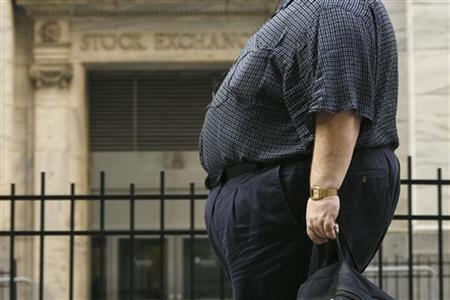
A man walks past the New York Stock Exchange after trading hours in New York August 17, 2009.[Agencies]

Midnight raids on the refrigerator may have worse consequences than indigestion -- a study in mice boosts the theory that when you eat affects whether the calories go to your hips or get burned off.

Mice fed during the daytime -- when they normally would be sleeping -- gained more weight than mice fed at night, Fred Turek of Northwestern University in Illinois and colleagues found.

They ended up weighing 7.8 percent more than night-fed mice. This held even though the mice were fed identical amounts of food and exercised the same amount, they said in the study published on Friday in the International Journal of Obesity.

"Simply modifying the time of feeding alone can greatly affect body weight," they wrote.

"Mice fed a high-fat diet only during the 'right' feeding time (i.e., during the dark) weigh significantly less than mice fed only during the time when feeding is normally reduced (i.e., during the light)."

The finding might help people trying to lose weight, the researchers said.

It may be possible to simply change the timing of meals and snacks, they said. That could mean eating more in the daytime and cutting back on the late-night ice cream.


taken from : China Daily


Read more!

Saturday, September 5, 2009

Unhealthy habits alter thinking, memory skills

Unhealthy habits alter thinking, memory skills

A woman smokes a cigarette in a restaurant in Munich, December 31, 2007.[Agencies]

NEW YORK- If you're having trouble remembering where you left your keys or recalling a word, mull over the number of times and how many years you've continued unhealthy behaviors.

Previous research has linked declining thinking and memory skills with unhealthy behaviors such as smoking, abstaining completely from alcohol, not getting enough physical activity, and not eating enough fruits and vegetables daily.

In the current study, Dr. Severine Sabia and colleagues found the more each of the 5,123 adult participants reported these behaviors the greater their "risk of cognitive deficit," Sabia told Reuters Health in an email.

Over a 17-year period, adult men and women who accumulated the most versus the least number of unhealthy behaviors were nearly three times more likely to show poor thinking skills, and about two times more likely to have declining memory, Sabia and colleagues report in the American Journal of Epidemiology.

Sabia, of Hopital Paul Brousse in Villejuif, France, and fellow researchers surveyed health behaviors of civil service office workers in London, UK, when the workers were 44 (early-midlife), 56 (midlife), and 61 (late-midlife) years old.

After allowing for the impact of age, gender, and social and economic status, the investigators found current smokers more likely to show the lowest memory, verbal, and math-related thinking and reasoning skills at each survey.

The investigators noted similar findings among non-drinkers versus those who had between 1 and 14 alcoholic drinks a week, and those who ate fewer versus more than 2 servings of fruits and vegetables each day.

Men and women who reported lower levels of physical activity during midlife and late-midlife also showed greater risk for cognitive deficit.

Considering the unhealthy behaviors assessed in the current study are modifiable, Sabia's team calls for greater promotion of healthy lifestyles to protect against later-life cognitive deficits.


taken from : China Daily


Read more!

Premium denim still hot with U.S. consumers, investors

Premium denim still hot with U.S. consumers, investors

A pair of women's premium denim jeans, selling for $375.00, is pictured in a retail store in San Francisco, September 3, 2009.[Agencies]

LAS VEGAS -The crowds pressing to enter the booths at a trade show here weren't in line for the buffet or to catch the latest show in town. They were apparel buyers, anxious to place orders for jeans.

Not just any old jeans: premium denim, which uses costlier fabric and more sophisticated fits and finishes. The category remains strong even as the broader apparel market licks its wounds from a disastrous selling year.

At the PROJECT show in Las Vegas, where U.S. buyers connect with apparel brands, all the focus was on high-end denim, where prices routinely hit $200 or more.

"Walking the show, denim as a category was the busiest category. And True Religion was by far the busiest," said Needham & Co analyst Christine Chen. The company is known for a horseshoe design stitched onto its back pockets.

At rival Citizens of Humanity, orders logged on the first day of the show were double those of a year ago, said Chief Operating Officer Gary Freedman.

The premium denim market held up over the holiday quarter and first part of this year, when other apparel categories saw plummeting sales from the sharp pullback in consumer spending.

That may be because premium jeans can be worn day or night and for special occasions, and cost the same as a dress.

The $1.32 billion market grew 5 percent in the 12 months ended June, according to research firm NPD Group. Sales in the overall apparel industry slid 5 percent in the same timeframe.

The category's strength has spurred many other brands not known for denim, such as Cache Inc and AnnTaylor Stores Inc, to add jeans to their mix, albeit at lower prices.

And it still captures the interest of investors, attracted by margins that can rise to as much as 60 percent.

True Religion stock has risen 77 percent since January, compared to the 11 percent rise at the S&P 500 Index.

At the tony San Francisco boutique Sarah Shaw, young women in their 20s as well as mothers wanting to show off their figures shell out $184 for a pair of Paige premium denim.

The price tag doesn't faze them, said Alexandra Faay, manager and assistant buyer -- what's important is fit.

"It's all about the quality. You can go to Gap and you can go to Old Navy and get your cheap fix on denim but these ladies are spending $200 because they know they'll last," she said.


Gap Inc is currently promoting what it calls its new "premium" jeans, which cost about $54.

Investors are also considering longevity. Paul Zaffaroni, vice president of investment banking at Roth Capital Partners, said there is still keen investor interest in premium denim brands. A few new deals will be announced by year's end, he said.

Premium denim still hot with U.S. consumers, investors

Women's premium denim jeans, some selling for nearly $400.00, are pictured in a retail store in San Francisco, September 3, 2009.[Agencies]

"When private equity looks at premium denim brands, they're looking for ones they can develop into full-blown lifestyle brands," he said, referring to those with a strong image that are capable of selling a range of categories beyond just jeans.

Premium denim already has fat gross margins, around 50 to 60 percent of sales, and adding new categories that can be licensed is an attractive and profitable strategy.

Because of the relatively low sales volume of premium jeans, those margins are rarely undercut, said Brean Murray, Carret analyst Eric Beder.

When the premium denim boom first hit about five years ago, an excess of brands flooded the market. But those that couldn't deliver to retailers on time, or those with ill-fitting or ho-hum product, have fallen by the wayside, leaving major names such as Rock & Republic, J Brand and William Rast, to cement their hold on the market.

Rather than cut prices in the downturn, premium denim players are becoming more nimble. Stores want quicker turnover of product and smaller orders, so Citizens of Humanity now provides a wider range of styles that can be supplied quickly, Freedman said.

Lowering prices is neither necessary, nor smart, he said.

"That's not who we are," Freedman said, adding that any move from a $175 to a $125 jean might stimulate sales "but it's not a good long-term policy."

Back at the boutique, manager Faay said the best-fitting jeans are worth the price: "The women who buy premium are still going to. They're not going to stop."


taken from : China Daily


Read more!

Thursday, September 3, 2009

Beautiful Dresses at Venice

Beautiful Dresses at Venice
U.S. actress Eva Mendes [Agencies]

Beautiful Dresses at Venice

Italian actress Francesco Scianna [Agencies]


Beautiful Dresses at Venice

Pier Silvio Berlusconi (R), son of Italy's Prime Minister, and his wife Silvia Toffanin [Agencies]


Beautiful Dresses at Venice
Italian actress Margareth Made [Agencies]

Beautiful Dresses at Venice

Italian actress Maria Grazia Cucinotta [Agencies]


Beautiful Dresses at Venice

Renault team boss Flavio Briatore (R) and his wife Elisabetta Gregoraci [Agencies]


taken from : China Daily
Read more!

Plus-size fashion market squeezed in recession

Plus-size fashion market squeezed in recession

This photo taken Aug. 19, 2009 shows a large display of women's plus sized clothing at a J.C. Penney store in Miami. Plus size brands are aiming to create sexy and sleek designs like never before, but customers are not buying clothes at the rate they used to.[Agencies]

MIAMI –The American waistline may be expanding, but plus-size shoppers are tightening their belts.

People just aren't buying plus-size clothing at the rate they used to. Apparel in general — being a discretionary purchase — is suffering because of the economy, but plus-size has been particularly hard hit.

According to the NPD Group, a market research company, the overall women's apparel business is down about 5 percent and plus-size is down almost 10 percent from the 12 months ending in May 2009 compared to the same time the year before.

It's hard to account for the dip at a time when more than half of American women are estimated to wear plus-sizes, generally considered size 14 and up, but analysts have some theories.

"The stigma still continues despite the majority of the population is overweight," said Marshal Cohen, chief retail analyst at NPD. The stigma means some retailers don't want to lure overweight customers and send out the "wrong" image, experts said, and the customers themselves may feel put off by many stores.

Some retailers, including Old Navy, Banana Republic and Ann Taylor, have taken their plus-size collections out of stores and are selling only online — which some experts say plus-size shoppers prefer. Others, including H&M, have dropped out of the plus-size market.

Several years ago, stores had made an effort to expand the plus-size market, but they have basically abandoned that during the recession, Cohen said.

"They've made feeble attempts at going after it, but now that business is challenged, it is first thing knocked out of the store," he said. "Even though they built it, this was not a field of dreams for the retailer."

And there's also the uncomfortable connection between obesity and lower incomes, which might help explain the dip. A study of nationally representative data on American workers by two professors at Stanford University found that obese workers at the same level of job experience, education and gender earned less than their thinner colleagues.

For women, there was a statistically significant difference of wages of $2.64 per hour. For men it was 58 cents per hour, which wasn't statistically significant.

"The recession has hit workers hard, obese (workers) are hit particularly hard," said Jay Bhattacharya, associate professor of medicine at Stanford University.

Christie L. Nordhielm, associate professor of marketing at the University of Michigan, said that if overweight people are paid less, it would make sense that they would cut down on buying clothes.

"If they are stressed about paying their mortgage they are not going to be in a clothing store getting this year's hot new look," she said.

Still, several brands are reaching out to plus-size customers. Lane Bryant is launching a couture-inspired line called the icon Collection by Lane Bryant in September, while Forever 21 has launched a plus-size line called Faith 21.

And for some retailers, plus-size clothing remains a relative bright spot.


"I will say that the general apparel and upscale retailers is soft and large sizes is no worse — a little better — than the apparel," said Frank Doroff, Bloomingdale's vice chairman and general merchandise manager for ready-to-wear.

Bloomingdale's sells plus sizes at 80 percent of the stores across the U.S., and Doroff said the department store is trying to add brands that cater to plus sizes. The store carries lines including Lauren by Ralph Lauren and Jones New York.

"We need to give better service and better assortment," he said, adding that plus-size customers buy a lot of other items in the store. "It's the value of that customer, not simply what clothes they buy."

Recent reports accused the company of cutting floor space for plus-size clothing at its New York City flagship store and offering fewer lines. Liz McGovern, Bloomingdale's Director of National Media Relations, said the department was moved because customers indicated they wanted to shop on the same floors as other women, and that the amount of inventory is not specific to plus size. It is an industrywide trend.

Other department stores Macy's and JC Penney also say they are working to court the plus-size customer.

"She wants to look good, feel fashionable and look good in clothes. And she wants fashion," said Nicole Fischelis, group vice president of ready-to-wear fashion at Macy's. "We offer the same trends we address with our regular-size customer."

Marianne Stone, divisional vice president in women's apparel for JC Penney, said the store's plus-size business has increased over the last years, but wouldn't give specific numbers. She did say lines like Unity and nicole by Nicole Miller were added and that the store offers plus-size customers "the same fashion looks, same fashion trends that we have in missy."

"We are really doing whatever we can to offer this customer fashion," she said "She's hungry for it."

Stone agrees that stigma is a big problem for this market, with retailers not making a big enough effort to attract the plus-size customer, but she added that JC Penney spends a lot of time bringing in a variety of people and doing fit seminars, to make sure the clothes are cut properly for the different body types.

"We are one of the leading businesses at JC Penney," she said. "In this economic environment I don't think anybody is in a growth mode."

taken from : China Daily


Read more!

Most expensive wedding performers

Most expensive wedding performers

1: The Rolling Stones are the most expensive wedding act in the world according to new research from Living TV. The rockers, who only consider private performances if they're already on tour - charge about eight million U.S. dollars to perform.[Agencies]


Most expensive wedding performers

2: Elton John is the second most expensive, charging over two million for private performances.[Agencies]


Most expensive wedding performers

3: Kylie Minogue also charges over two million.[Agencies]


Most expensive wedding performers

4: Christina Aguilera charges up to two million.[Agencies]


Most expensive wedding performers

5: George Michael charges almost two million.[Agencies]


Most expensive wedding performers

6: Amy Winehouse charges about 1.5 million.[Agencies]


Most expensive wedding performers

7: As does Paul McCartney.[Agencies]


Most expensive wedding performers

8: And Leona Lewis.[Agencies]


Most expensive wedding performers

9: And also Jennifer Lopez.[Agencies]


Most expensive wedding performers

10: Barry Manilow charges about a million.[Agencies]


taken from : China Daily


Read more!

CoCo Lee in wedding gowns

CoCo Lee in wedding gowns
Pop diva CoCo Lee is the cover star of the Sep. issue of bridal magazine 'Darazi'. CoCo shares her views on marriage, family and more in her feature. [Photo: ent.sina.com.cn]

CoCo Lee in wedding gowns
Pop diva CoCo Lee is the cover star of the Sep. issue of bridal magazine 'Darazi'. CoCo shares her views on marriage, family and more in her feature. [Photo: ent.sina.com.cn]

CoCo Lee in wedding gowns
Pop diva CoCo Lee is the cover star of the Sep. issue of bridal magazine 'Darazi'. CoCo shares her views on marriage, family and more in her feature. [Photo: ent.sina.com.cn]

taken from : China Daily


Read more!

Wednesday, September 2, 2009

Why grandma was wrong about fiber

Why grandma was wrong about fiber

Soluble types of bran can ease inflamed bowels while insoluble varieties don't work.

Wheat bran and other fibrous foods that do not dissolve easily in water not only fail to soothe irritable bowels but may actually make things worse, according to a new study.

While soluble types of bran like psyllium appear to ease inflamed bowels, the insoluble varieties that have long been a staple for people in search of regularity don't work as advertised, the study finds.

Bran is the hard outer layer of grains. Psyllium, also referred to as ispaghula, is derived from the seed husks of the Plantago ovata plant, and is the chief ingredient in many over-the-counter laxatives.

The signature symptoms of irritable bowel syndrome (IBS), which affects about 10 percent of the population, are abdominal pain and an irregular bowel habit.

In many countries, doctors recommend daily doses of fiber in the form of insoluble bran, but there have been very few rigorous studies to see whether boosting intake of this type of fiber actually works.

A team of researchers from the Netherlands led by Rene Bijkerk of the University Medical Center set up clinical trials to find out.

They divided 275 patients into three groups, and gave each a different 12-week treatment regimen.

One group ate 10g of bran twice a day, and a second ate the same quantities of psyllium, which forms a gel-like substance when mixed with water.

A third group ate a neutral placebo made out of rice flour, which contains no fiber at all.

All but 6 percent of the participants were Caucasian, and more than three-quarters were women, who suffer from IBS more than men.

The patients had either been diagnosed as having the syndrome within the last two years, or fulfilled other criteria for chronic bowel-related problems.

A standardized scale measuring the severity of symptoms showed that psyllium was the most effective treatment, even after only one month.

After three months the severity was reduced by 90 points in the psyllium group, 49 points in the placebo group, and 58 points in the bran group.

The slight difference between the bran and the rice gruel placebo was judged statistically insignificant.

"Bran showed no clinically relevant benefits, and many patients seemed not to tolerate bran," the researchers report in the British Medical Journal.

"Indeed, bran may worsen symptoms of irritable bowel syndrome and should be advised only with caution."

Previous studies have linked soluble fibers to healthy blood cholesterol levels and a better regulation of blood sugar levels. Food sources that contain soluble fiber include psyllium, barley, oatmeal, lentils, fruit and vegetables.


taken from : China Daily


Read more!

Tuesday, September 1, 2009

For heart health: avoid tobacco smoke, pollution

If you want to dramatically lower the odds that you'll die of heart disease, go live someplace where public smoking is banned.

In a study of more than a million people, researchers found that even low levels of smoke from co-workers' cigarettes can substantially raise your risk of death from heart disease.

While you're packing to move, look for a place without much pollution, because a second study involving more than 9 million people in 126 counties across the U.S. has shown a direct correlation between the amount of carbon monoxide in the air and daily admissions to emergency rooms for heart problems.

Both studies are reported Monday in the American Heart Association's medical journal, Circulation.

In the first study, Dr. C. Arden Pope III from Brigham Young University in Arden, Utah and colleagues analyzed data on roughly 1.2 million adults that had been collected over 25 years as part of a study by the American Cancer Society.

"We've known for a long time that smoking exposes your lungs to massive amounts" of fine particulates and increases your risk of dying from heart disease, Pope told Reuters Health. Compared to active smoking, the dose of particulates to the lungs with passive smoking is "much, much smaller," he added.

Even so, earlier studies have suggested surprisingly high rates of heart disease deaths from passive smoking, out of line with the much smaller dose of particulates. So, Pope said, he and his colleagues decided, "We're going to take the largest data set available" - from the American Cancer Society's Cancer Prevention Study II - "and look at the effects of different increments of exposure" to smoke and other pollutants on risk.

They discovered, Pope said, that "the biggest increases in risk occur at lighter levels of exposure."

For example, compared to people who have never smoked, people who smoke up to 3 cigarettes per day increase their risk of dying from heart disease by 65 percent. Doubling or tripling the amount of cigarettes per day doesn't double or triple the risk, however; instead, for people smoking 8 to 12 cigarettes per day, the risk for heart disease death is increased to "only" 79 percent compared to never-smokers.

People smoking 18 to 22 cigarettes per day -- about a pack - have double the risk compared to never smokers.

"Even more amazing," said Pope, was that compared to people who had never smoked and had no heavy exposure to smokers, passive smokers had a 20 to 30 percent higher risk of heart disease-related deaths. The strongest effect is seen in spouses of smokers.

The research team points out that the relationship between dose of tobacco particulates and the response in terms of increased risk is very steep. "With light exposure, the result is substantial," Pope said, but with incremental increases in exposure, the increases in risk, while already high, start to rise more gradually.

This means, Pope said, that "while it may do some good to smoke less, by far the biggest benefit is in not smoking at all." For example, he said, for smokers who are going to cut back by 3 cigarettes per day, the benefit of going from 20 to 17 is not nearly as large as the benefit of going from 3 to zero.

"In some ways, this is good news," Pope commented. "This adds to the plausibility that passive smoking and air pollution have a substantial effect on health." Cardiovascular disease is very common, he noted, "so this impacts a lot of people."

"We could get substantial public health benefits from reducing smoking and reducing passive smoking and exposure to air pollution," Pope said.

In the second study, Dr. Michelle Bell from Yale University in New Haven, Connecticut and colleagues studied how carbon monoxide levels in the air - mostly from traffic -- affect the numbers of people who show up in emergency rooms with heart problems.

They use hospitalization data from Medicare on more than 9.3 million enrollees, and pollution data from air quality monitoring stations in 126 urban counties across the United States where the Medicare recipients live.

The research team found "a positive and statistically significant association" between carbon monoxide levels on any given day and increased risks of hospitalization for a wide variety of heart problems.

Furthermore, this effect was evident even when daily 1-hour maximum carbon monoxide exposure was less than 1 part per million, well within the 35 part per million limit set by US regulatory agencies.

"Although much of the current research on health and traffic-related air pollution focuses on particulate matter, our study indicates that ambient carbon monoxide and traffic may present a far larger health burden than suspected previously," Bell and her colleagues conclude.


taken from : China Daily


Read more!

Retail clinics give similar care, cheaper: U.S.

Retail clinics give similar care, cheaper: U.S. study

A Take Care Nurse Practitioner treats a patient at the Take Care Health Clinic in Elk Grove Village, Illinois, March 2007.[Agencies]

Clinics in drug stores provide care for minor ailments on par with, or better than, other medical facilities at significantly lower costs, according to a study released on Monday.

The study, published in the September edition of the Annals of Internal Medicine, surveyed data on 2,100 patients treated for middle ear infections, sore throats and urinary tract infections at retail clinics.

The quality of care offered at the in-store clinics was in line with doctors' offices and urgent care centers and slightly better than at emergency departments, Dr. Ateev Mehrotra of the University of Pittsburgh School of Medicine and the Rand research institute and colleagues found.

There are about 1,200 in-store clinics in the United States, a number that has risen steadily since the first such clinic opened in 2000. The clinics have already served more than 3.5 million patients, according to the Convenient Care Association, an industry group.

Patients are seeking lower-cost healthcare as prices and insurance premiums rise. Clinic operators have been trying to position themselves as fast, cheaper alternatives that can work in concert with traditional medical facilities.

Healthcare reform is at the center of President Barack Obama's political agenda but Congress is debating details of how to provide insurance to more Americans.

"We need to continue to examine retail medical clinics as they grow in number, but the results we have seen thus far suggest they provide high-quality care in a convenient and cost-effective fashion," said Mehrotra.

At most clinics, nurse practitioners treat minor ailments, perform immunizations and do routine exams such as back-to-school sports physicals. Insured patients often have visits covered in line with coverage for visits to doctors.

The study was based on data from HealthPartners enrollees who visited Minute Clinic locations in Minnesota between 2005 and 2006 and compared their results with others who visited traditional medical facilities.

The average cost for treatment at clinics was $110, including the evaluation, pharmacy, laboratory and other costs. The average cost was $156 at an urgent care facility, $166 at a doctor's office and $570 at an emergency department.

The study found no evidence to support concerns such as clinics providing a lower quality of care or overprescribing antibiotics. However, it did show that a smaller proportion of high-risk patients received urine cultures at retail clinics compared with other settings.

And the researchers noted that the patients in their study had health insurance, while up to a third of people in the United States who use such clinics do not have insurance.

Minute Clinic is owned by CVS Caremark Corp, while rival Walgreen Co operates hundreds of clinics under the Take Care name. Other companies run clinics inside stores such as Wal-Mart, Target and grocery stores.

Funding for the study was provided by the California Health Care Foundation and a career development award from the National Center for Research Resources, part of the National Institutes of Health.


taken from : China Daily


Read more!

Worrying about a job can damage health more than loss

Worrying about a job can damage health more than loss

A man looks at job postings at a job fair in New Hampshire in a file photo. [Agencies]

Worrying about the looming threat of unemployment can be more damaging to a person's health than actually being jobless, according to a U.S. study.

With the United States suffering its worst recession since the depression, researchers set out to look at how job insecurity impacted the health of workers.

"This study provides the strongest evidence to date that persistent job insecurity has a negative impact on worker health," said sociologist Sarah Burgard of the University of Michigan Institute of Social Research.

"It may seem surprising that chronically high job insecurity is more strongly linked with health declines than actual job loss or unemployment."

Burgard and her colleagues James House and Jennie Brand, of the University of California, Los Angeles, assessed the impact of job insecurity by analyzing data on 1,700 adults and studies conducted between 1986 and 1989 and from 1995 and 2005.

In one group included in the research published in the journal Social Science and Medicine, they found that chronic job insecurity was a stronger predictor of poor health than either smoking or high blood pressure.

UNRELENTING NATURE OF UNCERTAINTY

The researchers questioned people about the likelihood of losing their main job in the next couple of years and the chances of holding on to the position.

They also asked people to rate their overall health and used a scale of depressive symptoms to gauge their mood and psychological health.

The research included people who had lost their jobs and those who had managed to get back into the labor force.

"We definitely found that persistent job insecurity had a stronger impact on health decline than those job losses. This is among people who managed to get back in," Burgard told Reuters.

"Persistent stress is a strain on people. It is the unrelenting nature of the uncertainty that really gets you."

She added that the long-term nature of job insecurity can raise blood pressure and change levels of stress hormones that over-time can lead to health problems.

"Anything that employers can do to provide more information for workers about what is likely to happen is probably a good thing," said Burgard.

One of the most stressful aspects of job loss is losing the benefits that go with it. Unlike many European countries which have nationalized health systems, health coverage in the United States is tied to employment.

"I think that is part of the reason we are finding the large effects of persistent insecurity. There are real consequences if you lose your job in the U.S.," Burgard explained.

"This is one of the big issues that we think make it a particularly salient stressor for people."

She suggested people facing potential unemployment should try to exert as much control as possible and to make a plan. If they have health coverage through their job they should use it while they still can.


taken from : China Daily


Read more!

Monday, August 31, 2009

Miley Cyrus performs on NBC's "Today" show in New York

Miley Cyrus performs on NBC's

Singer Miley Cyrus performs on NBC's "Today" show in New York, August 28, 2009. [Agencies]


Miley Cyrus performs on NBC's


Miley Cyrus performs on NBC's

Singer Miley Cyrus performs on NBC's "Today" show in New York, August 28, 2009. [Agencies]


Miley Cyrus performs on NBC's

Singer Miley Cyrus performs on NBC's "Today" show in New York, August 28, 2009. [Agencies]


Miley Cyrus performs on NBC's

Singer Miley Cyrus performs on NBC's "Today" show in New York, August 28, 2009. [Agencies]


Miley Cyrus performs on NBC's

Singer Miley Cyrus performs on NBC's 'Today' show in New York, August 28, 2009. [Agencies]


Miley Cyrus performs on NBC's

Singer Miley Cyrus performs on NBC's "Today" show in New York August 28, 2009. [Agencies]


taken from : China Daily


Read more!